Montessori Activities for 18 Month Old

Montessori activities for 18-month-olds can help your baby to grow well. A baby of 18 months old has control of his movements. He can sit and walk with focused, coordinated, and controlled movements. That’s why he has to participate in all practical life tasks. He wants to do all tasks independently. This is the age when we make them realize that they can do all things.

For Latest Scholarship Opportunities, Join WhatsApp and Telegram

Being adults, it’s our duty to encourage them and provide them opportunities that help them to develop their gross and fine motor skills. In this way we can make them responsible for their own tasks.

It is very important to model the activity properly and accurately. Because kids are in the growing process, once they learn any wrong habit at an early age, it will be very difficult to change it later.

So be vigilant and active when kids are around you. How you are talking with them or others in front of them and how you are handling the objects in front of them—they are observing you. They are just like copycats.

So perform activities as they are as you want them to perform.

Montessori activities for 18-month-olds are given below.

Exercises of Practical Life

Exercise of practical life  means  those tasks which are done by adults in day-to-day routine at home, like cleaning the house, maintaining and arranging cupboards, washing utensils, making beds, gardening, and personal grooming like washing hands, brushing teeth, combing hairs, changing clothes, etc.

Wiping a Table
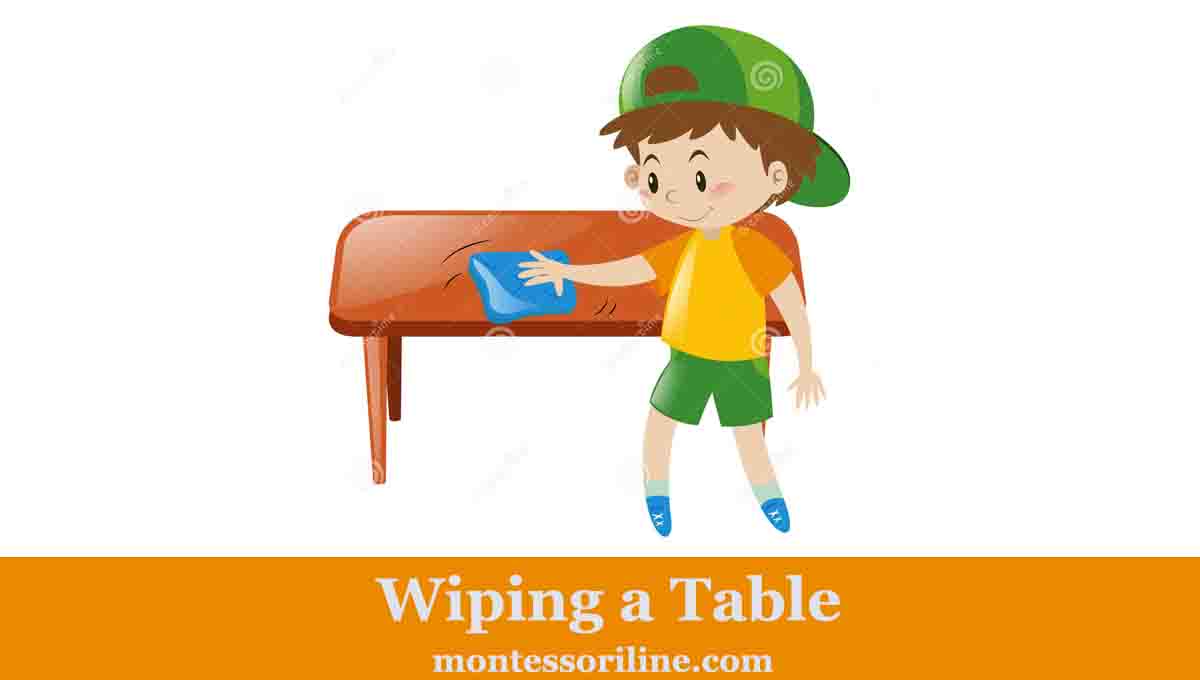
wiping a table is a montessori activities for 18 month old

Make a habit of your baby’s wiping the table before and after meals.

Dusting
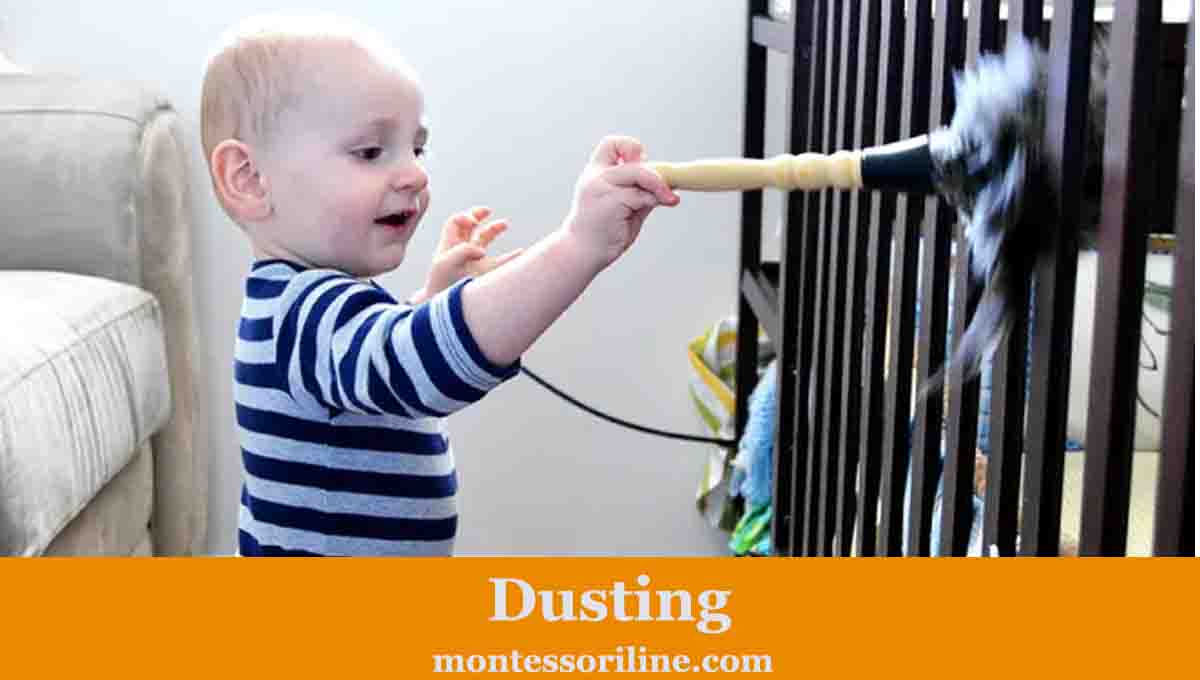
dusting is a montessori activities for 18 month old

Give them child-sized dusters for dusting. When you are busy dusting, involve your kid in this task. Give them verbal incentives like WOW! You’re dusting superb compared to me.

Such kinds of appreciation will boost up the confidence level of your child and sense of achievement as well.

Gardening
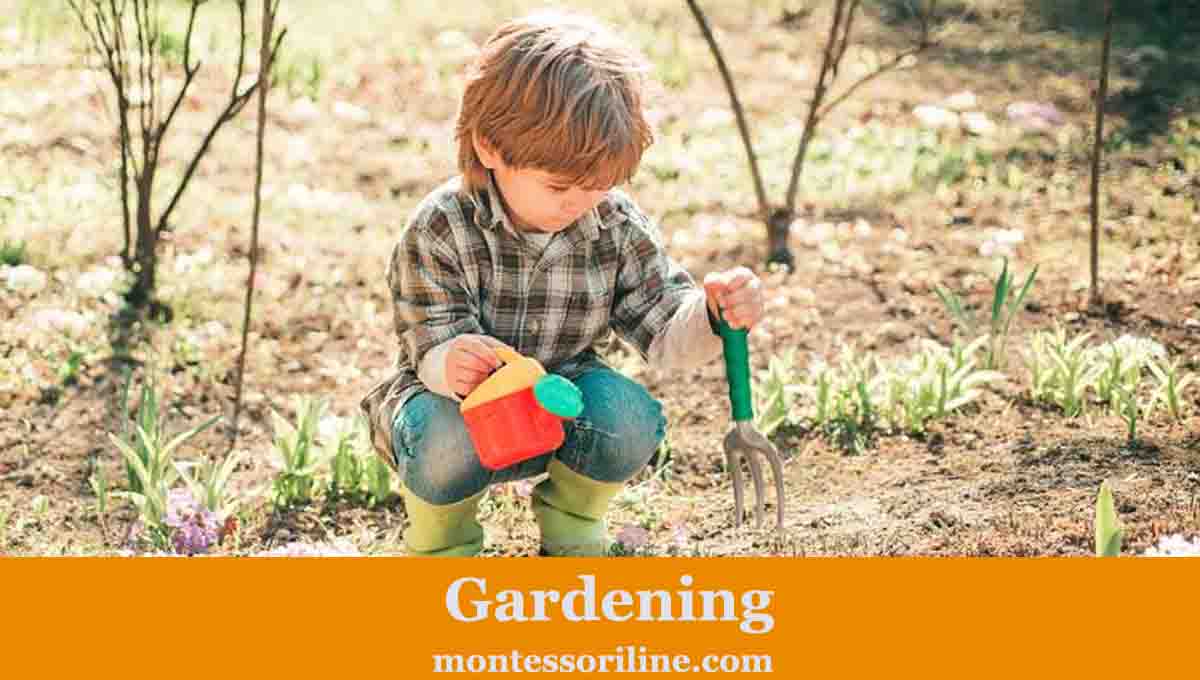
gardening is montessori activity for 18 month old

Grow plants with your child. Give water and take care of the plant on a daily basis so that your child could observe the needs and growth of a plant.

Use a broom and collect trash.

use broom and collect trash

Make a big circle mark on the floor and guide your ward to collect all trash in the circle. At the age of 18 months, children love to clean the floor with a broom while walking. You can make this activity more challenging with age by making the size of the mark small for collecting trash.

Pouring Water from Pitcher to Pitcher

Pouring water from pitcher to pitcher is a montessori activity

Provide two same-sized child-sized pitchers, a tray, and one towel for cleaning the area. The child will pour water from one pitcher to another. After pouring, he will clean the area properly.

This activity will polish fine motor skills as well as hand and eye coordination.

Pouring Dry from One Bowl to Another Bowl

Pouring dry from one bowl to another bowl

We need two same-sized child-sized bowls. The child will transfer dry material (cereals, buttons, cotton balls, beads) from one bowl to another bowl without dropping them down. After the activity, the child will put down all those things that fell down during the activity, and then the activity will be completed.

This activity is also best for hand and eye coordination and fine motor skills.

Squeezing water

Squeezing water montessori activity

For this activity a child needs a child-sized sponge and two bowls. The child will squeeze water from one bowl to another bowl. After the activity, he will wipe the area.

Through this activity, a child’s hand muscles will become strong.

Montessori activities for 18-month-olds focus on practical life skills, sensory exploration, gross and fine motor development, and early language acquisition. These activities include simple tasks like object permanence boxes, transferring activities, simple puzzles, ball work, and real-life tasks such as helping with laundry or food preparation, all designed to foster independence and concentration.

Introduction

Eighteen months marks a fascinating developmental period when toddlers transition from baby-like dependence to surprising independence. I’ve watched countless children at this age tackle activities adults would never think they could manage—carefully transferring beans with a spoon, concentrating intensely on placing a ball in a box, or insisting on walking up stairs without help.

The Montessori approach recognizes this developmental explosion and provides carefully designed activities that channel this natural drive toward independence and mastery. Unlike passive entertainment, Montessori activities for 18-month-olds offer purposeful work that builds real skills while respecting the child’s developing capabilities.

This comprehensive guide will walk you through age-appropriate Montessori activities, explain the philosophy behind them, and show you how to implement these practices whether you’re a parent at home, a Montessori teacher, or an early childhood educator exploring child-centered approaches.

Why This Topic Matters

The period between 15 and 24 months represents one of the most explosive developmental windows in human life. During these months, toddlers develop approximately 50% of their adult brain capacity, acquire foundational language skills, and establish patterns for learning and independence that can last a lifetime.

Choosing the right activities during this period isn’t just about keeping your toddler busy—it’s about supporting critical neural development. Research in neuroscience consistently shows that hands-on, purposeful activities create stronger neural pathways than passive observation or entertainment.

Many parents and educators struggle with this age group because traditional approaches either underestimate toddlers’ capabilities or expect too much too soon. Montessori activities strike a balance by offering challenging yet achievable tasks that respect the child’s developing skills.

The practical skills developed through Montessori activities—concentration, hand-eye coordination, sequential thinking, and independence—form the foundation for later academic learning. An 18-month-old who learns to focus on pouring water into a cup is developing the same concentration needed for reading at age six.

Montessori Foundations Related to This Topic

Dr. Maria Montessori observed that children between 12 and 24 months enter what she called the “sensitive period for order.” This isn’t about being neat—it’s about understanding sequences, routines, and cause-and-effect relationships. An 18-month-old who protests when you skip a step in their bedtime routine isn’t being difficult; they’re manifesting a developmental need to understand patterns.

The Montessori concept of the “absorbent mind” is particularly active at 18 months. Unlike older children who learn through conscious effort, toddlers absorb experiences directly into their developing brains. This makes the quality of their daily activities critically important.

Another key principle is the “prepared environment”—a space designed to enable independence rather than require adult intervention. For an 18-month-old, this means low shelves, child-sized furniture, and materials that invite exploration without constant supervision.

Montessori emphasizes “freedom within limits,” which is particularly relevant at this age. An 18-month-old needs the freedom to choose activities and repeat them as often as needed, but within clear boundaries that ensure safety and respect for others.

The principle of “following the child” doesn’t mean letting toddlers do whatever they want. It means carefully observing their current developmental needs and interests, then providing activities that match those needs. One 18-month-old might be fascinated by containers and filling them, while another focuses on climbing and gross motor challenges.

Understanding Development at 18 Months

Before selecting activities, it’s helpful to understand what’s happening developmentally. At 18 months, most toddlers can:

Gross Motor Skills:

  • Walk independently with increasing confidence
  • Begin to run (though often falling)
  • Walk up stairs with support
  • Push and pull toys while walking
  • Begin attempting to kick a ball
  • Climb onto furniture

Fine Motor Skills:

  • Use a pincer grasp consistently
  • Stack 2-4 blocks
  • Turn pages in a book (often several at a time)
  • Scribble with crayons
  • Attempt using a spoon
  • Drink from a cup with some spilling

Cognitive Development:

  • Understand object permanence
  • Engage in simple pretend play
  • Follow one-step instructions
  • Match similar objects
  • Demonstrate cause-and-effect understanding
  • Show early problem-solving attempts

Language Development:

  • Say 10-50 words (varies widely)
  • Understand far more than they can say
  • Follow simple verbal requests
  • Point to familiar objects when named
  • Begin combining two words
  • Use gestures to communicate

Social-Emotional Development:

  • Show preference for certain people
  • Display separation anxiety
  • Engage in parallel play
  • Test boundaries consistently
  • Show early empathy
  • Express a wide range of emotions intensely

These developmental capabilities inform appropriate Montessori activity selection.

Core Categories of Montessori Activities for 18-Month-Olds

Practical Life Activities

Practical life forms the foundation of Montessori education, especially for toddlers. These activities build concentration, coordination, independence, and a sense of belonging within the family or classroom community.

Care of Self:

Dressing Frame Activities
While traditional Montessori dressing frames may be too advanced, you can introduce very simple versions. A piece of fabric with two large buttons sewn on teaches the basic motion without the complexity of actual clothing.

Hand Washing
Set up a low stool at the bathroom sink or create a washing station with a small pitcher and basin. The sequence—turn on water, wet hands, soap, rub, rinse, dry—teaches order and self-care. I’ve seen 18-month-olds spend ten minutes perfecting this routine, returning to it throughout the day.

Putting on Shoes
While tying is far off, toddlers this age can learn to bring their shoes when it’s time to go outside and attempt putting them on (even if on the wrong feet initially). Shoes with large Velcro straps support early independence.

Using a Napkin
Demonstrating wiping one’s mouth and hands with a napkin during meals teaches self-care and table manners. Toddlers love imitating this grown-up behavior.

Care of Environment:

Sweeping
A child-sized broom and dustpan allow toddlers to help clean up crumbs or small messes. The activity develops gross motor skills and environmental responsibility. Don’t expect perfection—the process matters more than the result.

Watering Plants
A small watering can (preferably metal for realistic weight and feedback) and a plant that clearly needs water create purposeful work. Show the child exactly where to pour and how much. Many 18-month-olds check “their” plant daily, demonstrating emerging care for living things.

Putting Away Toys
This shouldn’t be forced compliance but an integral part of the work cycle. When each material has a specific place on the shelf, putting it away becomes part of the activity. Using trays or baskets with picture labels helps toddlers match materials to their homes.

Washing a Table
A small pitcher of water, a sponge, and a towel allow the child to clean their workspace after snack or art activities. The sequence—wet sponge, squeeze, wipe table, dry with towel—builds coordination and order.

Food Preparation:

Slicing Bananas
Using a crinkle cutter or dull butter knife, 18-month-olds can slice soft bananas placed on a small cutting board. This activity requires close supervision but builds tremendous concentration and hand strength.

Spreading
Provide softened butter or cream cheese and a small spreader. The child can practice spreading on crackers or bread. This develops the wrist rotation needed for many later skills, including writing.

Pouring
Start with dry materials like rice or beans, pouring from one small pitcher to another. Once mastered, progress to water. Use child-sized transparent pitchers so the toddler can see the liquid level. Keep a small towel nearby—spills are learning opportunities, not failures.

Preparing a snack
Setting up a snack station where the child can access crackers, cheese slices, or fruit pieces builds independence. They learn to recognize hunger, serve themselves appropriate amounts, and clean up afterward.

Sensorial Activities

Dr. Montessori designed sensorial materials to refine the senses and build cognitive foundations for later abstract thinking. For 18-month-olds, these activities should be simple and focus on obvious contrasts.

Touch and Texture:

Touch Boards
Create simple boards with contrasting textures—smooth wood versus sandpaper, soft fabric versus rough burlap. The toddler explores these with their hands, building tactile discrimination.

Fabric Matching
Place three pairs of different fabric squares in a basket—silk, wool, and cotton work well. Show the child how to feel each piece and find its match. This builds sensory awareness and early matching skills.

Texture Walk
Create a path with different textures—carpet squares, rubber mats, smooth wood, and bumpy bubble wrap. The child walks barefoot, experiencing varied sensations. This develops proprioception and sensory awareness.

Visual Discrimination:

Color Matching
Start with three pairs of primary-colored objects—two red bowls, two blue blocks, and two yellow balls. The child matches pairs by color. Keep the objects identical except for color to isolate the variable.

Size Gradation
Provide three nesting cups or stacking rings in obviously different sizes. The toddler explores how they fit together, building understanding of size relationships through hands-on experience.

Simple Puzzles
Single-shape puzzles with large knobs are perfect for this age. The child removes the piece and replaces it, developing hand-eye coordination and spatial awareness. Start with a circle, square, and triangle.

Auditory Discrimination:

Sound Cylinders
Fill pairs of small containers (film canisters work well) with different materials—rice in two, beans in two, and bells in two. Shake them to find matches. This refines listening skills and teaches matching.

Musical Instruments
Simple instruments—a drum, a xylophone, and maracas—allow exploration of different sounds. Demonstrate gentle use and let the child experiment with creating sounds.

Olfactory Exploration:

Smelling Jars
Place cotton balls with different safe scents (vanilla, lemon, cinnamon) in small jars. The child smells each one, building olfactory awareness. Name each scent simply: “This is lemon.”

Language Development Activities

Language acquisition accelerates dramatically at 18 months, even if expressive language varies widely among children.

Vocabulary Building:

Classified Cards
Use simple, realistic images showing single objects—animals, vehicles, and household items. Name each one clearly: “Cat. This is a cat.” At this age, the child absorbs vocabulary even if not yet speaking the words.

Object Baskets
Create themed baskets with real objects—farm animals, vehicles, and kitchen items. The child handles each object while you provide the vocabulary. Real objects create stronger learning than pictures alone.

Body Parts
During care routines, name body parts consistently: “Let’s wash your hands. Here are your fingers.” Simple songs about body parts reinforce this vocabulary naturally.

Books and Reading:

Board Books
Choose books with simple, clear images and minimal text. Books about daily routines, animals, or vehicles work well. Let the child control page-turning and pointing to pictures.

Story Baskets
Pair a simple book with related objects—a book about farm animals with small farm animal figures. This makes stories concrete and interactive.

Early Communication:

Sign Language
Basic signs for “more,” “all done,” “help,” “milk,” and “eat” can reduce frustration for toddlers whose receptive language exceeds their expressive abilities. Demonstrate signs consistently during relevant situations.

Conversation During Routines
Narrate daily activities: “Now we’re washing your hands. The water feels cold. We’re using soap. It makes bubbles.” This models language structure and builds vocabulary in context.

Fine Motor Development Activities

Fine motor skills develop through purposeful, challenging activities that toddlers can practice repeatedly.

Transfer Activities:

Spooning
Large dried beans or large buttons (too big to swallow) can be transferred from one bowl to another using a spoon. This develops the tripod grasp and hand-eye coordination needed for later self-feeding.

Tongs
Child-sized tongs or large tweezers allow the child to transfer pompoms or cotton balls between containers. Start with large, soft items and bigger tongs for initial success.

Pouring
As mentioned in practical life, pouring develops wrist control, concentration, and hand-eye coordination. Start with large containers and obvious openings before progressing to smaller vessels.

Hand Strengthening:

Play Dough
Simple play dough (homemade with flour, salt, and water) can be poked, squeezed, and flattened. This builds hand strength needed for many later skills. Avoid multiple colors or complex tools at this age.

Posting Activities
A simple box with a slot and large wooden disks to post through develops the pincer grasp and hand-eye coordination. The satisfying sound of the disk dropping reinforces the activity.

Pegs and Pegboards
Large pegs and a board with correspondingly large holes allow the child to practice the controlled pincer grasp. Start with just a few pegs to avoid overwhelming the child.

Tool Use:

Hammer and Pegs
A simple pounding bench with large pegs develops hand strength and coordination. The cause and effect—hammer strikes peg, peg goes down—is immediately satisfying.

Stirring
Real cooking activities that involve stirring—mixing muffin batter, stirring yogurt and fruit—develop the shoulder rotation and hand strength needed for many tasks.

Gross Motor Development Activities

Large muscle development remains crucial at 18 months as toddlers refine balance, coordination, and spatial awareness.

Balance and Coordination:

Walking Line
A line of tape on the floor (or a balance beam barely off the ground) invites the child to practice walking carefully. This develops concentration, balance, and body control.

Carrying Objects
A small basket with handles or a tray allows the child to carry objects from one place to another. This develops balance, coordination, and spatial awareness while serving a real purpose.

Climbing Structure
A small climbing triangle (Pikler triangle) or low, stable climbing structure allows safe practice of climbing skills. Supervision is essential, but resist helping unless truly necessary.

Ball Work:

Rolling a Ball
Sitting across from the child, roll a ball back and forth. This simple activity develops hand-eye coordination, turn-taking, and social interaction.

Dropping Balls
A simple ball-drop toy—a ball placed on top rolls down through internal structures—teaches cause and effect while the child practices controlled release with fingers.

Stair Practice:

If you have safe stairs with a railing, supervised stair practice (walking up while holding the rail, initially) builds leg strength and coordination. Make it purposeful by having the child carry a small object upstairs to “deliver” it.

Art and Creativity Activities

Montessori art at this age emphasizes process over product and real materials over plastic toys.

Drawing and Coloring:

Large Crayons
Thick, sturdy crayons and large paper allow free exploration. Place just 2-3 crayon colors on the table to avoid overwhelming the child. The scribbling develops the tripod grasp and hand strength.

Chalk on Chalkboard
A small chalkboard at child height with large chalk pieces offers a different tactile experience. The ability to erase and try again removes pressure for perfection.

Painting:

Water Painting
A small container of water and a large paintbrush allow the child to “paint” outside on pavement or a fence. The mark appears temporarily and then disappears, allowing endless repetition without waste.

Dot Markers
Large, washable dot markers (bingo daubers) let the child make marks easily without the coordination required for brush painting. The satisfying dot creation keeps many toddlers engaged for extended periods.

Collage and Glue:

Simple tear-and-paste activities with large pieces of paper and non-toxic glue sticks introduce early collage work. The tearing develops hand strength, while the gluing practices hand-eye coordination.

Setting Up the Montessori Environment for 18-Month-Olds

The Prepared Environment at Home

Creating a Montessori environment doesn’t require expensive materials or a dedicated playroom. It requires thoughtful arrangement that enables independence.

Low Shelves:
Install or purchase low, open shelving where all materials are visible and accessible. Avoid toy boxes where everything piles together—the child should see each activity clearly.

Limited Choices:
Place only 6-8 activities on the shelf at a time. Too many choices overwhelm toddlers and actually reduce engagement. Rotate materials weekly based on the child’s current interests and developmental needs.

Organized Presentation:
Each activity should be complete and contained—typically on a tray or in a basket. When everything needed is together, the child can work independently without asking for missing pieces.

Child-Sized Furniture:
A small table and chair, coat hooks at toddler height, and a low mirror help children manage their own needs. When the bathroom stool reaches the sink comfortably, hand washing becomes possible independently.

Natural Materials:
Choose wood, metal, glass (supervised), and fabric over plastic when possible. Natural materials provide better sensory feedback and connect children to the real world they’re trying to understand.

Order and Beauty:
Keep the space uncluttered and aesthetically pleasing. Use neutral colors for storage and let the materials themselves provide visual interest. A beautiful environment teaches appreciation and care.

The Montessori Classroom for 18-Month-Olds

Montessori classrooms for this age (often called Nido or Young Toddler Communities) share home environment principles but accommodate multiple children.

Movement Areas:
Designated spaces for gross motor activities—climbing structures, balance beams, areas for ball work—separate active movement from concentrated table work.

Floor Beds or Low Cots:
Rather than cribs, low beds allow children to manage their own rest needs, developing body awareness and self-regulation.

Practical Life Stations:
Semi-permanent setups for hand washing, food preparation, and care of environment activities invite repeated practice throughout the day.

Natural Light and Outdoor Access:
Large windows and easy outdoor access connect children to nature and provide natural light that supports healthy development.

Mixed Age Grouping:
When possible, grouping 12-24 month-olds together allows younger children to observe older peers while older children develop leadership and caring behaviors.

Montessori Education in the United States

The United States hosts the largest concentration of Montessori schools globally, with approximately 5,000 schools ranging from small in-home programs to large institutions serving hundreds of families.

Montessori education for toddlers has grown significantly in recent years as research validates early childhood approaches that emphasize hands-on learning and independence. Many parents specifically seek Montessori programs starting at 18 months because they want to encourage independence and practical skills early.

The American Montessori Society (AMS) and the Association Montessori Internationale (AMI) provide accreditation and teacher training throughout the United States. Programs vary widely in how strictly they adhere to Montessori principles—some are purely Montessori while others blend approaches.

Cost remains a significant barrier for many American families, with toddler programs often exceeding $1,000 monthly in urban areas. This has led to growing interest in Montessori homeschooling and home-based approaches, particularly for the 18-month to 3-year age range.

Recent trends show increased interest in Montessori principles among mainstream early childhood educators, leading to “Montessori-inspired” programs in traditional daycare settings. While purists debate these adaptations, they do introduce Montessori concepts to families who might not otherwise encounter them.

State regulations for childcare programs serving 18-month-olds vary considerably, with some states requiring specific ratios and credentials that can challenge smaller Montessori programs. However, many states now recognize Montessori certification as equivalent to traditional early childhood credentials.

Montessori Education in Canada

Canada has seen steady growth in Montessori education, with particular concentration in Ontario, British Columbia, and Quebec. The Canadian Council of Montessori Administrators provides networking and support for Canadian programs.

Canadian Montessori programs often integrate French language learning, particularly in the Quebec and Ottawa regions, introducing bilingual education from the toddler level. This aligns well with Montessori’s emphasis on language acquisition during sensitive periods.

Provincial regulations for toddler care vary significantly. Some provinces, like British Columbia, have specific licensing categories for Montessori programs, while others include them under general childcare licensing.

Affordability challenges mirror those in the United States, though some Canadian provinces offer subsidies for early childhood education that can apply to Montessori programs. Quebec’s subsidized childcare system has created unique opportunities and challenges for Montessori programs operating within that framework.

Indigenous perspectives are increasingly integrated into Canadian Montessori programs, with some schools incorporating Indigenous language learning and cultural perspectives alongside traditional Montessori materials—an approach that honors both philosophies’ respect for the child and nature.

The Montessori homeschool movement in Canada is robust, with active networks and provincial organizations supporting families implementing Montessori principles at home, particularly popular for the toddler years.

Montessori Education in the United Kingdom

The United Kingdom’s Montessori community includes approximately 700 schools, with the Montessori Schools Association and Montessori Centre International providing teacher training and program support.

British Montessori programs often integrate the Early Years Foundation Stage (EYFS) framework with Montessori principles. While some see this as dilution, many programs successfully align both approaches, satisfying regulatory requirements while maintaining Montessori philosophy.

Ofsted (Office for Standards in Education) inspections evaluate Montessori settings using the same criteria as other early years programs. Programs that clearly articulate how Montessori methods address EYFS goals typically perform well in inspections.

The tradition of nursery education in the UK aligns well with Montessori’s mixed-age groupings and child-led learning. Many British families seek Montessori specifically for the 18-month to 3-year period before transitioning to state primary schools.

Forest School approaches have influenced British Montessori programs, with many incorporating outdoor learning and nature connection more extensively than traditional Montessori might prescribe—a development that honors Montessori’s emphasis on nature while adapting to British educational culture.

Funding challenges are significant, particularly in London and Southeast England, where property costs make operating affordable programs difficult. Some Montessori programs now operate within children’s centers or share space with state facilities to manage costs.

Montessori Education in Australia

Australia’s Montessori community has grown substantially in recent decades, with Montessori Australia Ltd providing national coordination and support. Programs span the continent from urban centers to remote communities.

Australian Montessori programs must align with the Early Years Learning Framework (EYLF), which fortunately shares many principles with Montessori philosophy—both emphasize child-centered learning, respect for individual development, and holistic growth.

The cultural emphasis on outdoor education aligns beautifully with Montessori principles. Many Australian programs feature extensive outdoor environments where 18-month-olds can engage in nature-based learning daily, weather permitting.

Aboriginal and Torres Strait Islander perspectives are increasingly incorporated into Australian Montessori programs, with some schools developing materials and approaches that honor Indigenous knowledge systems alongside Montessori principles.

Government funding through the Child Care Subsidy can make Montessori programs more accessible to Australian families, though availability varies significantly between urban and rural areas.

Rural and remote communities have developed innovative Montessori approaches, including mobile programs and distance support for families implementing Montessori at home—particularly valuable for families with 18-month-olds in areas without local programs.

Montessori vs Traditional Education

AspectMontessori Approach (18 months)Traditional Approach (18 months)
Learning StructureChild-directed within prepared environment; child chooses activities and works at own paceAdult-directed group activities: all children do same activity at same time
MaterialsReal, purposeful objects; breakable items used with supervision; natural materialsPlastic toys; play versions of real objects; focus on safety over realism
Adult RoleGuide/observer: demonstrates activities then steps back; intervenes minimallyDirector: leads activities; entertains children, and prevents most risks
IndependenceEncouraged from the beginning; child feeds self, washes hands independently, manages belongingsAdults do most care tasks for children; independence expected later
EnvironmentCarefully prepared; everything accessible; child-sized furniture; limited choicesAdult-centered space adapted for children; toys in boxes; many options available
Learning GoalsConcentration, coordination, independence, order; academic learning emerges from practical workSocial development, play skills, basic safety; academic learning starts later
AssessmentObservation of engagement, concentration, skill development; individual progressGroup milestones; comparison to age norms
Approach to ChallengesNatural consequences when safe; child solves problems with minimal interventionAn adult prevents problems; immediate help when child struggles
Daily RhythmUninterrupted work periods; child completes chosen activity before transitioningFrequent transitions; schedule-driven; activities limited by time
Social LearningMixed ages when possible; learns from observing others; parallel play respectedSame-age grouping; adult-organized social activities; sharing required

Developmental Comparison

AreaMontessori Activities FocusTraditional Activities Focus
Fine MotorReal tasks: spooning, pouring, using tools; progressive difficultyToys designed for skill building; less emphasis on real-world application
Gross MotorPurposeful movement: carrying, climbing with purpose, walking in a lineFree play; outdoor play equipment; organized group games
LanguageRich vocabulary during daily routines; precise names for objects; extensive readingSongs, simple stories, focus on words child can say rather than understand
CognitiveHands-on problem solving; real cause-and-effect, and concrete learningToys with built-in feedback; some educational apps/screens
Self-CareActive participation in dressing, feeding, cleaning; real responsibilitiesAdults handle most care; child gradually learns specific skills
EmotionalFeelings acknowledged; child learns self-regulation through predictable environmentDistraction and redirection common; adult manages child’s emotional state

Real-World Examples

Home Environment: The Martinez Family

Sarah Martinez began implementing Montessori principles when her daughter Elena turned 15 months. Rather than purchasing expensive materials, she adapted their home environment with thoughtful changes.

She installed a low rod in Elena’s closet and placed four outfits within reach. Each morning, Elena could see her options and pull down what she wanted to wear. While she often chose mismatched patterns, she dressed herself (with help for difficult buttons) with obvious pride.

In the kitchen, Sarah designated a low cabinet as Elena’s, filling it with unbreakable plates, cups, and bowls. A small pitcher of water in the refrigerator (refilled frequently) allowed Elena to pour her own drinks. Spills happened daily at first, but Elena learned to get the towel and clean them up. By 20 months, spills were rare, and Elena’s concentration during pouring was remarkable.

The most transformative change was the snack basket. Sarah placed a low basket with healthy snacks—crackers, cheese cubes, and sliced fruit—on a low shelf. Elena learned to recognize hunger, take a snack, sit at her table to eat, and return the basket. This eliminated much of the whining and demanding that had characterized snack time previously.

Montessori Classroom: Maple Street Toddler Community

At Maple Street Montessori’s toddler community, lead guide Rebecca organizes the environment for eight children aged 15-24 months, with two assistant teachers.

The morning begins with arrival routines each child can manage independently. Liam, 19 months, hangs his coat on his picture-labeled hook, takes off his shoes, and places them on his shelf space. He then washes his hands at the child-height sink before entering the classroom.

The classroom shelves offer about ten activities, rotated based on the teachers’ observations of the children’s interests and developmental needs. This week, several children have shown interest in containers and filling, so the shelf includes the following:

  • A posting box with large wooden disks
  • A spooning activity with large wooden beads
  • A simple puzzle with three shapes
  • Nesting cups
  • A book about containers with a basket of real containers to explore

Liam chooses the spooning activity, carefully carrying the tray to a table. Rebecca had shown him this work the previous week. Now he works independently, moving beads from one bowl to another with complete concentration for nearly eight minutes—remarkable for his age.

When several beads fall on the floor, he pauses, looks around, and walks to the small broom in the corner. After Rebecca showed him once how to sweep beads into the dustpan, he practiced repeatedly. The sweeping isn’t perfect—some beads escape—but he’s developing real skills and taking responsibility for his environment.

Later, during food preparation time, Liam helps prepare snack alongside another child. They slice bananas with child-safe knives, arrange them on a small plate, and serve themselves. The process takes fifteen minutes—far longer than if adults prepared snacks—but the concentration, coordination, and community building justify the time investment.

Homeschool Setting: The O’Connor Family

Jennifer O’Connor homeschools her three children, including 18-month-old Patrick. She’s adapted Montessori principles to work within their family routine.

Each morning after breakfast, while his older siblings do formal lessons, Patrick has his “work time.” Jennifer sets up his low shelf the night before with four activities based on his current interests and developmental needs.

This week’s shelf includes the following:

  • A simple shape sorter he’s nearly mastered
  • A new activity: dropping clothespins into a jar (building pincer grasp)
  • His favorite book about trucks with three small trucks to match to pictures
  • A basket with large nuts and bolts to screw together

Jennifer intentionally includes one activity Patrick has mastered, two at his current level, and one slightly challenging. She observes which activities he chooses and how long he engages with each, making notes in her journal to inform next week’s selections.

Patrick’s involvement in family life provides many practical life opportunities. He helps transfer laundry from washer to dryer (building gross motor skills), wipes his placemat after meals, and “helps” sweep the floor. Jennifer narrates these activities richly: “We’re taking the wet clothes from the washing machine and putting them in the dryer. Feel how heavy this wet towel is? Let’s place it in the dryer.”

The mixed-age environment offers unique benefits. Patrick’s six-year-old brother often shows him activities, naturally modifying his demonstration to Patrick’s level. This peer teaching reinforces the older child’s skills while providing perfect scaffolding for Patrick.

Traditional Daycare Incorporating Montessori Principles

Bright Beginnings Daycare, a traditional center, began incorporating Montessori principles in its young toddler room after the director attended a Montessori conference.

They started with environmental changes: replacing toy boxes with low shelves, organizing materials on trays, and creating specific areas for different types of activities. Rather than all toys available all the time, they rotated materials weekly.

Teacher Amanda introduced practical life activities gradually. She set up a small hand-washing station and taught children the sequence. She added real dishes to the dramatic play area and introduced simple food preparation during snack time.

The impact surprised everyone. Children who previously flitted from activity to activity began working with concentration. Behavioral challenges decreased because children could manage more of their needs independently. Parents commented on new skills their toddlers demonstrated at home—attempting to pour drinks, insisting on washing hands independently, and showing interest in helping with household tasks.

While the program isn’t purely Montessori—they still have circle time and adult-directed activities—the Montessori elements have transformed the quality of children’s engagement and learning.

Benefits

The benefits of appropriate Montessori activities for 18-month-olds extend across developmental domains and create foundations for lifelong learning:

Developmental Benefits:

  • Enhanced concentration: Regular practice with engaging activities builds focus duration from seconds to minutes
  • Refined fine motor skills: Precise hand movements with real objects accelerate coordination development
  • Improved gross motor coordination: Purposeful large muscle activities build balance, strength, and spatial awareness
  • Accelerated language acquisition: Rich vocabulary during meaningful activities expands understanding and expression
  • Advanced problem-solving: Hands-on challenges build logical thinking and persistence
  • Stronger hand-eye coordination: Activities requiring visual-motor integration develop neural pathways efficiently

Independence and Self-Confidence:

  • Self-care capabilities: Children learn to manage dressing, feeding, and hygiene independently
  • Decision-making skills: Choosing activities builds confidence and executive function
  • Self-awareness: Managing real tasks helps children understand their capabilities and limitations
  • Intrinsic motivation: Success with challenging activities builds internal drive rather than dependence on external rewards
  • Emotional regulation: Predictable routines and mastery experiences support self-calming and resilience

Social and Emotional Benefits:

  • Respect for others: Learning to wait, work quietly near others, and share space builds social awareness
  • Empathy development: Caring for the environment and contributing to family/classroom life fosters compassion
  • Community participation: Real contributions to daily life create belonging and purpose
  • Frustration tolerance: Working through challenges with support builds emotional resilience
  • Joy in work: Discovering that effort brings satisfaction creates positive associations with learning

Family Dynamics:

  • Reduced power struggles: When children can do things independently, conflicts decrease
  • Meaningful contribution: Toddlers who help with real tasks feel valued family members
  • Enhanced communication: Rich language during activities improves parent-child connection
  • Household harmony: Children engaged in purposeful activity require less entertainment and management
  • Realistic expectations: Parents learn what toddlers can truly do, reducing frustration on both sides

Long-Term Academic Foundations:

  • Pre-literacy skills: Fine motor control and left-to-right sequencing prepare for writing and reading
  • Mathematical thinking: Sorting, matching, and one-to-one correspondence build number sense
  • Scientific observation: Hands-on exploration with cause-and-effect develops scientific thinking
  • Executive function: Planning, completing, and cleaning up activities builds crucial cognitive skills
  • Love of learning: Success with challenging activities creates positive associations with education

Challenges

Implementing Montessori activities with 18-month-olds presents real challenges that deserve honest acknowledgment:

Time and Patience Requirements:

  • Slower pace: Allowing a toddler to dress themselves takes much longer than dressing them
  • Demonstration time: Properly showing activities requires focused attention from adults
  • Cleanup: Toddlers learning practical skills create bigger messes before they master cleaning
  • Repetition: Children need to see activities demonstrated multiple times
  • Observation: Identifying appropriate activities requires watching the child carefully

Initial Investment:

  • Environmental setup: Child-sized furniture, accessible storage, and appropriate materials require initial cost
  • Material acquisition: While many materials can be DIY, quality items have costs
  • Time to organize: Creating an effective prepared environment takes planning and effort
  • Learning curve: Adults need time to learn Montessori principles and approaches
  • Ongoing rotation: Keeping materials fresh and appropriate requires continuous attention

Safety Concerns:

  • Real materials: Using glass, ceramics, and breakables requires supervision and accepting some breakage
  • Sharp tools: Introducing real knives (child-safe but functional) makes some parents nervous
  • Climbing: Allowing children to climb and challenge themselves risks falls
  • Choking hazards: Small manipulatives require vigilance with children who mouth objects
  • Water activities: Pouring and washing involve spill and water safety concerns

Social Pressures:

  • Judgment from others: Extended family may criticize allowing “dangerous” activities or expecting “too much.”
  • Comparison with peers: Other toddlers in traditional settings may meet different milestones at different times
  • Advice conflicts: Pediatricians and parenting resources may contradict Montessori approaches
  • School incompatibility: If later education won’t be Montessori, transitions may be challenging
  • Partner disagreement: When caregivers have different philosophies, consistency suffers

Child-Specific Challenges:

  • Individual differences: Not every child responds identically to Montessori approaches
  • Sensitive periods: Missing a sensitive period means an activity won’t engage as deeply
  • Developmental delays: Children with delays may need adaptations to access Montessori benefits
  • Temperament variations: Highly active children may struggle with concentrated table work initially
  • Interest fluctuations: What engaged a child last week may not interest them this week

Practical Implementation Issues:

  • Limited space: Small living quarters make dedicated Montessori environments challenging
  • Multiple children: Different aged siblings need different materials and approaches
  • Inconsistent routines: Irregular schedules make consistent Montessori practice difficult
  • Cultural mismatch: Some Montessori practices may conflict with cultural values or practices
  • Resource limitations: Not everyone can access or afford Montessori materials or training

Perfectionism Traps:

  • All-or-nothing thinking: Believing you must implement Montessori perfectly or not at all
  • Material obsession: Focusing more on acquiring authentic materials than observing your child
  • Comparison: Constantly comparing your setup to others’ social media presentations
  • Rigidity: Following Montessori “rules” without adapting to individual circumstances
  • Guilt: Feeling like a failure when real life doesn’t match Montessori ideals

Common Mistakes Parents Make

Understanding common pitfalls helps avoid them:

Mistake 1: Too Many Choices

The Problem: Shelves overflowing with materials overwhelm toddlers rather than inviting engagement. When faced with twenty options, 18-month-olds often wander without settling on any activity.

The Solution: Limit shelf materials to 6-8 items maximum. Rotate weekly based on observation of your child’s interests. Less truly is more at this age.

Mistake 2: Helping Too Much

The Problem: Jumping in the moment a child struggles prevents them from developing problem-solving skills and persistence. The parent’s need to prevent frustration undermines the child’s development.

The Solution: Wait and observe. Many children work through challenges if given time. Offer help only when frustration reaches the point of giving up, and then offer the minimum assistance needed—a hint, not a solution.

Mistake 3: Expecting Perfect Execution

The Problem: Correcting a child’s work or redoing it “properly” after they finish teaches that their efforts aren’t good enough. An 18-month-old who sweeps most crumbs into the dustpan has succeeded, even if some remain.

The Solution: Focus on the process, not the product. Acknowledge effort: “You worked hard sweeping those crumbs.” Resist fixing their work unless it creates a real problem.

Mistake 4: Using Montessori Materials as Toys

The Problem: Allowing children to play with Montessori materials in unintended ways—dumping all the pegs out to use the board as a drum—can happen if activities aren’t demonstrated properly.

The Solution: Always demonstrate the intended use before giving a new material. If the child consistently uses it differently, either they’re not developmentally ready, or they have a creative use that’s equally valid. Distinguish between exploration and misuse.

Mistake 5: Forcing Activities

The Problem: Insisting a child complete an activity because “we always finish our work” contradicts Montessori’s principle of following the child. Interest varies daily, and forced work kills intrinsic motivation.

The Solution: Observe why the child isn’t engaging. Is the activity too hard? Too easy? Not interesting right now? Respect their “no” and offer something else, or allow them to choose.

Mistake 6: Inconsistent Environment

The Problem: Creating a beautiful Montessori space but allowing it to become disorganized, with materials scattered or missing pieces, prevents children from working independently.

The Solution: Maintain the environment as carefully as you initially created it. Each evening, check that all materials are complete and properly arranged. Teach your child to return items to their places as part of the work cycle.

Mistake 7: Adult-Centered Perspective

The Problem: Choosing materials based on what adults think is educational or cute rather than observing what the child actually needs developmentally.

The Solution: Watch your child. What do they repeatedly try to do? What skills are they working on? Choose activities that match these observed interests and emerging capabilities.

Mistake 8: Comparing to Others

The Problem: Worrying that your 18-month-old isn’t doing what another Montessori child the same age does creates anxiety and pressures the child inappropriately.

The Solution: Remember that Montessori is individualized. Your child is exactly where they need to be. Trust the process and your child’s internal developmental timeline.

Mistake 9: Neglecting Outdoor Time

The Problem: Focusing so intently on indoor Montessori activities that outdoor exploration and nature connection get minimized.

The Solution: Balance is essential. Daily outdoor time is foundational in Montessori philosophy. Nature provides irreplaceable learning opportunities and supports overall development.

Mistake 10: Forgetting the Adult’s Inner Work

The Problem: Implementing Montessori externally while maintaining a controlling, reactive parenting approach undermines the philosophy’s benefits.

The Solution: Montessori requires adults to cultivate patience, observation skills, and respect for the child. Work on your own growth alongside implementing activities.

Expert Tips

Drawing from experienced Montessori educators and parents who’ve successfully implemented these principles:

Start Small and Build Gradually

Don’t try to transform your entire home or approach overnight. Choose one area—perhaps mealtimes or one activity shelf—and implement Montessori principles there. Once that’s established, expand to another area. This prevents overwhelm and allows you to learn as you go.

Observe More, Do Less

Spend time watching your child without intervening. Notice what captures their attention, what they repeatedly attempt, and where they get frustrated. These observations guide activity selection far better than any list of “appropriate” materials.

Slow Your Own Pace

Adults naturally move much faster than toddlers. Consciously slow down during demonstrations and daily routines. This allows the child to actually see each step and creates a calm rather than frantic atmosphere.

Create Rituals Around Activities

Establish consistent routines: retrieve the tray from the shelf, carry it to the table, complete the work, and return it to the shelf. These predictable sequences build order and allow the child to work independently.

Invest in Key Pieces First

If the budget is limited, prioritize a few quality items: a good low shelf, a child-sized table and chair, and basic practical life materials (small pitcher, real dishes, basic tools). These foundation pieces serve for years.

Use What You Have

Many effective Montessori materials live in your home already: wooden spoons, small bowls, fabric scraps, containers of various sizes, and real tools sized appropriately. Shop your own kitchen and home before buying specialized materials.

Embrace Imperfection

Your environment won’t look like Instagram photos. Your child will use materials in unexpected ways. You’ll get frustrated and help too much sometimes. This is normal and okay. Progress, not perfection, is the goal.

Connect with Community

Find other Montessori parents or educators, either locally or online. Sharing challenges and solutions, swapping materials, and encouraging each other makes the journey more sustainable.

Document Progress

Take photos or short videos periodically showing your child engaged with activities. When you feel discouraged, reviewing these reminds you of real progress that’s easy to miss in daily life.

Trust the Process

Montessori works, but not always on your timeline. A child may ignore an activity for weeks, then suddenly engage deeply with it. Seeds you plant now bear fruit you can’t yet see.

Prepare for Sensitive Periods

When your child becomes intensely interested in something—containers, doors opening and closing, specific textures—capitalize on this sensitive period by offering related activities. These windows of intense learning close, so use them.

Limit Screen Time

Passive screen entertainment contradicts everything Montessori promotes. The concentrated engagement with hands-on activities requires protecting toddlers from screen dependency. Save screens for rare, specific purposes if used at all.

Model the Behaviors You Want

Children this age learn through imitation. If you want your child to move carefully, speak kindly, and work with concentration, demonstrate these qualities yourself. Your modeling is the most powerful teaching tool.

Create Beauty

Even simple materials can be presented beautifully. A woven basket, a small vase with a flower, materials arranged aesthetically—these details aren’t frivolous. Beauty invites care and engagement.

Respect Your Child’s Work

When your 18-month-old is concentrating on an activity, avoid interrupting unless absolutely necessary. That concentration is the most important thing happening in that moment. Protect it.

Latest Montessori Trends in 2026

Nature-Based Integration

The growing recognition of children’s need for nature connection has led to increased outdoor Montessori programs for toddlers. Nature-based activities—playing with natural loose parts, gardening, nature walks with discovery baskets—complement traditional Montessori materials. Many programs now intentionally schedule substantial outdoor time regardless of weather, embracing the Scandinavian “no bad weather, only bad clothing” philosophy.

Trauma-Informed Practices

Montessori educators increasingly integrate trauma-informed care principles, recognizing that some children need additional support for emotional regulation. This includes more explicit teaching of emotional vocabulary, calm-down spaces in classrooms, and modified expectations for children with traumatic backgrounds while maintaining Montessori core principles.

Neurodiversity Affirmation

Rather than trying to make neurodiverse children fit into a standard Montessori mold, 2026 sees more programs adapting Montessori principles to honor neurodivergent learning styles. This includes modified sensory environments, alternative communication systems, and recognition that independence looks different for different children.

Technology Boundaries

As screen exposure for young children has increased society-wide, Montessori programs are more explicitly positioning themselves as screen-free zones. Parents increasingly seek Montessori specifically to counter screen culture and provide hands-on, real-world learning experiences.

Parent Education Focus

Recognizing that consistency between home and school enhances outcomes, more Montessori programs offer parent education—evening workshops, lending libraries of materials, home visit programs, and detailed communication about extending classroom learning at home.

Culturally Responsive Adaptation

Montessori communities are grappling with how to honor the method’s foundations while adapting to diverse cultural contexts. This includes incorporating home languages more intentionally, using culturally relevant materials, and recognizing that some Montessori practices may need modification to align with different cultural values.

Sustainability Emphasis

Environmental consciousness shapes material choices, with increased use of secondhand and repurposed materials, DIY options, and locally sourced natural materials. The “buy all authentic Montessori materials” approach is giving way to more sustainable, accessible alternatives.

Mental Health Priority

Recognition of early childhood mental health importance has led to more focus on emotional intelligence development. This includes explicit teaching of emotional regulation strategies, mindfulness practices adapted for toddlers, and attention to children’s stress levels.

Accessible Montessori Movement

Efforts to make Montessori education accessible beyond affluent families are expanding. Public Montessori programs, sliding-scale tuition, and advocacy for including Montessori in publicly funded early childhood education all reflect this trend.

Documentation and Assessment

Digital portfolios and photo documentation are increasingly used to capture children’s development and communicate with families. This balances the Montessori rejection of traditional testing with parents’ desires to understand their children’s progress.

Best Montessori Resources for Parents

Books

For Understanding Montessori Philosophy:

“The Absorbent Mind” by Maria Montessori
The foundational text explaining Montessori’s observations about how young children learn. While dense, it provides irreplaceable insight into the why behind Montessori practices.

“The Montessori Toddler” by Simone Davies
A practical, accessible guide specifically for parents of 1-3-year-olds. Beautifully illustrated and realistic about implementation challenges.

“How to Raise an Amazing Child the Montessori Way” by Tim Seldin
Covers birth through six years with practical activities and clear explanations of developmental stages.

For Practical Implementation:

“Montessori from the Start” by Paula Polk Lillard and Lynn Lillard Jessen
Covers birth to three years with detailed guidance on creating environments and choosing activities.

“The Joyful Child: Montessori, Global Wisdom for Birth to Three” by Susan Mayclin Stephenson
Combines Montessori principles with global perspectives on early childhood care.

Organizations

American Montessori Society (AMS)
Provides school accreditation, teacher training program recognition, and resources for parents. Their website includes a school locator and extensive articles on Montessori topics.

Association Montessori Internationale (AMI)
The organization Maria Montessori founded, maintaining fidelity to original Montessori principles. Offers rigorous teacher training and school recognition.

Montessori Accreditation Council for Teacher Education (MACTE)
Accredits Montessori teacher education programs, ensuring quality training. Their site can help parents evaluate program credentials.

North American Montessori Teachers’ Association (NAMTA)
Provides professional development, conferences, and a journal exploring Montessori philosophy and practice.

Learning Materials

For Purchasing:

Alison’s Montessori – Wide selection of authentic materials at various price points, with activity guides included.

Montessori Services – Comprehensive selection plus books, furniture, and classroom supplies.

Nienhuis Montessori – Premium AMI-approved materials, considered the gold standard but priced accordingly.

Monti Kids – Subscription service delivering age-appropriate Montessori materials with parent guidance (primarily for U.S. families).

For DIY Materials:

“How We Montessori” blog – Extensive DIY material tutorials and home environment guidance.

“The Kavanaugh Report” blog – Realistic home implementation with DIY alternatives and activity ideas.

Etsy shops specializing in Montessori: Many sellers offer printable materials, handmade items, and more affordable alternatives.

Online Resources

Websites:

MontessoriGuide.org – Comprehensive overview of materials and their use across age groups.

“Living Montessori Now” blog – Activity ideas, free printables, and practical implementation guidance.

Age of Montessori – Beautiful photographs and clear explanations of implementing Montessori at home.

Social Media:

Instagram accounts like @montessori_nature, @howwemontessori, and @themontessoriroom provide daily inspiration, though remember that social media often shows idealized versions of reality.

Courses:

Montessori Parent/Child Courses – Many Montessori schools offer parent-child classes for young toddlers, providing hands-on guidance.

Online parent education—Organizations like Parent Education Network and various certified educators offer online courses in Montessori principles.

Local Resources

Finding Montessori Schools:

Use the AMS or AMI school directories to locate programs in your area. Visit schools, observe classrooms if possible, and interview teachers about their approach with 18-month-olds.

Parent-Toddler Classes:

Many Montessori schools offer drop-in or short-course parent-toddler programs. These provide exposure to materials, observation of trained teachers, and community with other Montessori families.

Montessori Playgroups:

Parent-organized playgroups using Montessori principles offer peer support and shared resources. Search local parenting groups or start one yourself.

Library Resources:

Many libraries carry Montessori books and can request titles through interlibrary loan. Some libraries now include Montessori-inspired learning kits to borrow.

Frequently Asked Questions

Q1: What is the ideal age to start Montessori activities?

Montessori principles can apply from birth, but formal activities typically begin around 12-15 months when toddlers can engage purposefully with materials. The 18-month period is particularly ideal because children are developmentally ready for practical life activities, have emerging language, and are intensely interested in doing things independently. However, starting Montessori at any age brings benefits—there’s no “too late.”

Q2: How many activities should an 18-month-old have available at once?

Six to eight activities is generally appropriate. This provides enough choice to honor the child’s interests without overwhelming them. Too many options paradoxically decrease engagement. Rotate materials weekly or as the child’s interest shifts, keeping some familiar favorites while introducing new challenges. Quality of engagement matters far more than quantity of options.

Q3: How long should activities last for a toddler this age?

Typical engagement for 18-month-olds ranges from 2-10 minutes, though some children occasionally concentrate for 15-20 minutes on particularly engaging activities. The goal isn’t long duration but complete focus during the time they work. As concentration develops through practice, duration naturally increases. Never force a child to continue an activity; honor their internal sense of completion.

Q4: Can I do Montessori at home without formal training?

Absolutely. While training deepens understanding, parents can successfully implement Montessori principles by reading quality resources, observing their child carefully, and applying core concepts: prepared environment, following the child, independence, and purposeful activity. Many children benefit enormously from home Montessori without their parents having certificates. The most important qualification is respect for the child and willingness to learn.

Q5: Are Montessori activities safe for 18-month-olds?

When appropriately selected and supervised, yes. Montessori uses real materials, including glass, ceramics, and functional tools, because these provide authentic feedback and treat children respectfully. However, “supervision” doesn’t mean hovering—it means being present and aware. Start with safer versions (thicker glass, larger pieces), demonstrate proper use, and gradually introduce more delicate items as the child demonstrates care. The breakage and minor bumps that occasionally occur are learning opportunities.

Q6: My child only wants to dump everything out. Is this normal?

Completely normal and developmentally appropriate. Dumping is often the first step toward more sophisticated use. After dumping, some children begin sorting, arranging, or experimenting with the materials in other ways. Demonstrate the intended use without criticism of dumping. If dumping persists, the activity may be developmentally too advanced; offer simpler materials. Or the child may be in a dumping-sensitive period—provide appropriate dumping activities (like dumping scarves in and out of a basket) to satisfy this need.

Q7: How do I know if an activity is too hard or too easy?

Observe engagement. Activities that are too easy bore children—they show brief interest then move on without concentration. Activities that are too hard frustrate children—they may try once or twice and then abandon the work. Appropriate activities engage the child’s focused attention for sustained periods (even if just a few minutes initially). Offer activities across difficulty levels and let the child’s choices and engagement guide you.

Q8: Should I correct my child when they do an activity “wrong”?

Gentle guidance differs from correction. If the child is exploring safely and purposefully, even if not using the material as designed, that exploration has value. If they seem frustrated or you believe they’d benefit from seeing the intended use again, you might say, “I’m going to show you another way this works,” and demonstrate without criticizing their approach. Avoid frequent corrections that communicate their efforts are inadequate.

Q9: How do Montessori activities differ from regular toddler toys?

Montessori activities have real purposes and connect to actual life skills. Rather than toy versions of real things, Montessori uses real things sized appropriately or simplified purposefully. Activities isolate specific skills (pouring, sorting, matching) rather than offering multiple functions. Materials are aesthetically simple, made from natural materials when possible, and stored organized and accessible rather than jumbled in toy boxes. The child’s work with Montessori materials is respected as important rather than viewed as “just playing.”

Q10: Can I combine Montessori with other approaches?

Yes, though understanding pure Montessori helps you choose which adaptations align with core principles. Many families blend Montessori practical life and environment setup with other approaches to play, art, or music. Some combine Montessori with Reggio Emilia, Waldorf, or RIE philosophies. The key is ensuring your overall approach respects the child, promotes independence, and provides hands-on learning experiences.

Q11: What if my child refuses to clean up after activities?

First, ensure cleanup is actually developmentally appropriate—very young toddlers need help. Model cleanup as part of the work cycle: “First we get the work, then we do the work, then we put it away.” Make cleanup as engaging as the activity itself—perhaps using a small brush and dustpan creates interest. Reduce the number of pieces so cleanup isn’t overwhelming. Stay nearby and participate initially: “You put this block in the basket; I’ll put this one.” As capability grows, gradually step back. Avoid battles—if genuine refusal continues, help matter-of-factly while working on making activities more engaging than cleanup isaversive.

Q12: How much time should we spend on Montessori activities daily?

There’s no prescribed duration. Some families offer Montessori activities for 30-60 minutes while parents prepare dinner or need focused work time. Others integrate Montessori principles throughout the day—the child participates in cooking, laundry, cleaning, and dressing, with specific shelf activities available when interest arises. Follow your child’s engagement. Some days they’ll deeply concentrate on activities; other days they’ll prefer outdoor play or being close to you without structured activities. Respect these natural rhythms.

Q13: What’s the difference between Montessori and Montessori-inspired approaches?

Authentic Montessori follows Dr. Montessori’s philosophy comprehensively: specifically designed materials used in particular sequences, mixed-age classrooms, trained guides, three-hour work periods, and specific approaches to discipline and community. “Montessori-inspired” borrows elements—perhaps low shelves and practical life activities—without implementing the complete method. Neither is inherently better; know which you’re practicing. At home, most families practice Montessori-inspired approaches, adapting principles to their circumstances rather than recreating classroom Montessori exactly.

Q14: Do I need expensive Montessori materials?

No. While authentic materials have benefits—precise construction, beautiful aesthetics, durability—many effective alternatives exist. Kitchen items, natural materials, and thoughtfully selected simple toys can provide similar learning opportunities. The prepared environment, adult approach, and respect for the child matter more than material expense. That said, a few key quality pieces—real pitchers and bowls, a good puzzle, solid wood materials—last through multiple children and provide better experiences than cheap plastic equivalents.

Q15: How do I handle grandparents or caregivers who don’t understand Montessori?

Start with common ground: everyone wants the child to thrive, learn, and develop confidence. Share specific benefits you’ve observed: “Since we started letting her pour her own water, she’s much more confident and calm at mealtimes.” Provide concrete guidance: “At our house, we let her walk up stairs by herself while we stay close. It’s building her balance and strength.” Choose your battles—grandparents giving a plastic toy won’t undo Montessori benefits at home. Model patience and respect for different approaches while maintaining your core principles.

Q16: Can Montessori work for children with developmental delays or special needs?

Yes, often beautifully. Montessori’s individualized approach, concrete hands-on learning, and respect for each child’s pace align well with diverse needs. However, some children require modifications: extended time with foundational activities, adaptive materials, additional sensory support, or alternative communication systems. Work with therapists to adapt Montessori principles to your child’s specific needs. The philosophy of meeting the child where they are and supporting their development toward independence applies to all children.

Q17: My child attends traditional daycare. Can we still do Montessori at home?

Absolutely. While consistency across environments benefits children, Montessori at home provides valuable experiences regardless of daycare approach. Focus on your home environment, involvement in daily routines, and weekend activities. Many children successfully navigate different approaches in different settings. The independence, practical skills, and concentration developed through home Montessori activities transfer to all environments.

Q18: How do I transition from Montessori activities to free play?

Montessori and free play aren’t opposites—Montessori activities are a form of play. However, children do benefit from various play types: Montessori shelf work, open-ended creative play, outdoor exploration, pretend play, and active movement. Offer different types at different times. Perhaps morning offers Montessori shelf activities, while afternoon provides outdoor free play and evening includes books and quiet creative activities. The child’s concentration on Montessori work develops capacities that enhance their free play, and vice versa.

Q19: What if my child wants the same activity every single day?

Honor this repetition—it indicates the child is consolidating a skill or satisfying a developmental need. Keep that activity available while rotating others around it. Eventually, having mastered it, the child will naturally move on. Forced variety before the child is ready interrupts important learning. That said, if one activity completely dominates to the exclusion of other developmental areas (only gross motor, never fine motor), gently limit access: “The climbing structure is for the afternoon.” This morning we have table activities.”

Q20: When should we transition from 18-month activities to older toddler activities?

Development, not age, determines appropriate activities. Observe your child’s skills, interests, and engagement. When current activities are consistently too easy—the child completes them quickly without concentration—introduce more challenging versions. This might happen at 20 months for some children, 24 months for others. Continue offering activities across difficulty levels. The transition isn’t sudden but gradual, with increasing complexity in practical life tasks, more sophisticated sensorial materials, and expanding language work as the child demonstrates readiness.

Internal Linking Suggestions

To provide comprehensive resources for your readers, consider linking to these related articles:

  1. “Montessori Activities for 12-15 Month-Olds”—Helps parents understand the developmental progression and appropriate activities for slightly younger toddlers
  2. “Setting Up a Montessori Toddler Environment at “Home”—Detailed guidance on creating the prepared environment referenced throughout this article
  3. “Montessori Practical Life Activities: Complete “Guide”—Deep dive into the practical life area that forms the foundation for 18-month-old activities
  4. “Understanding Sensitive Periods in Montessori “Education”—Explains the developmental windows that make certain activities particularly engaging at specific ages
  5. “Montessori vs. Traditional Preschool: Making the Right “Choice”—Helps parents considering formal programs understand differences and make informed decisions

External Authority Source Suggestions

Readers seeking additional authoritative information should explore:

American Montessori Society (amshq.org)
Comprehensive resource for understanding Montessori education, locating schools, and accessing parent education materials. Their “Montessori 101” section provides excellent foundational information.

Association Montessori Internationale (montessori-ami.org)
The organization Dr. Montessori founded offers the most traditional interpretation of her philosophy. Particularly valuable for understanding authentic Montessori materials and their intended uses.

Montessori Accreditation Council for Teacher Education (macte.org)
Useful for parents evaluating program quality by checking whether teachers have accredited training.

Zero to Three (zerotothree.org)
Not Montessori-specific but provides excellent research-based information on early childhood development that complements and validates Montessori approaches.

Centers for Disease Control and Prevention – Developmental Milestones (cdc.gov/ncbddd/actearly)
Offers developmental milestone information helping parents understand typical 18-month-old capabilities and when to seek additional support.

Montessori Australia (montessoriaustralia.org.au)
For Australian readers, provides country-specific resources, school directories, and information on Montessori in the Australian context.

Canadian Council of Montessori Administrators (ccma-ccom.ca)
Canadian-specific resources, school directories, and information on Montessori programs across provinces.

Montessori Schools Association – UK (montessori.org.uk)
British resources, including school directories, parent information, and how Montessori aligns with the EYFS framework.

Conclusion

The 18-month-old period represents an extraordinary developmental window when children rapidly transition from dependent babies to surprisingly capable small people. Montessori activities designed for this age honor this transformation by offering real, purposeful work that builds genuine skills while respecting the child’s emerging capabilities.

The activities outlined in this guide—from simple pouring exercises to participation in family life—aren’t about creating superbabies or accelerating development beyond natural rhythms. Instead, they recognize and support what children this age are already trying to do: master their bodies, understand their environment, communicate their needs, and contribute meaningfully to their communities.

Implementing Montessori principles with an 18-month-old requires patience, observation, and willingness to step back and let children struggle productively with appropriate challenges. The mess, the time investment, and the adjustments to your environment and expectations are real costs. But so are the benefits: children who concentrate deeply, work independently, take pride in real accomplishments, and develop the foundational skills that support all later learning.

Whether you’re implementing Montessori at home as a parent, teaching in a Montessori classroom, or incorporating these principles into another educational setting, remember that perfection isn’t the goal. Your thoughtful observation of your specific child, your creation of an environment that enables their independence, and your respect for their work—these matter far more than having every authentic material or following every guideline precisely.

Start where you are. Choose one area—perhaps mealtimes or a simple activity shelf—and implement Montessori principles there. Observe your child’s response. Adjust based on what you see. Gradually expand as you grow more comfortable with the approach. Montessori is ultimately less about specific materials and more about a fundamental shift in how we view children—as competent, capable individuals worthy of respect and real work suited to their developmental needs.

The concentration you’ll observe in your 18-month-old’s eyes as they carefully pour water, the pride when they successfully navigate stairs independently, the satisfaction when they help you prepare a meal—these moments reveal the profound truth Dr. Montessori recognized over a century ago: children don’t need to be entertained, distracted, or constantly stimulated. They need meaningful work, respect, and the freedom to develop according to their internal blueprint.

Your 18-month-old is ready for more than you might think. Trust them. Prepare the environment. Demonstrate clearly. Then step back and watch the remarkable unfolding of human potential in its earliest, most beautiful form.

Next Steps:

  1. Observe your child for several days, noting what they repeatedly attempt, what captures their attention, and where they seek independence
  2. Choose one area to start—practical life participation in family routines often provides the easiest entry point
  3. Set up a simple low shelf with 4-6 carefully chosen activities based on your observations
  4. Slow down and demonstrate one new activity, then allow your child to explore it repeatedly
  5. Connect with other Montessori families or educators for ongoing support and encouragement

The journey of implementing Montessori with your 18-month-old begins with a single purposeful activity. Begin today, and trust the remarkable process that unfolds.

Open and Close Baskets or Cupboards

Children at 18 months love to open the lids, cupboards, and bags. Then they want to make them empty. After taking all things out, they will make a mess. So here, it’s an adult’s responsibility to model for them how to arrange things back.

Sometimes a child will not put all things back, but you have to model. There will be a day when they will start putting all things back.

Apparently it looks simple, but this activity has long-term effects. This will develop love for work, a sense of cleanliness and responsibility, gross and fine motor skills, and respect for others.

Cognitive Activities

Those activities that make the thinking process active develop critical thinking, reasoning, and problem-solving skills in children at an early age and are called cognitive activities.

Montessori believes that adults don’t need to tell or guide them for selecting activities. Their strong inner urges and interests will guide them and take them to the appropriate material. An adult’s responsibility is to provide a variety of materials for cognitive development. The child uses them according to his interest and experiences that material and learns through his experience.
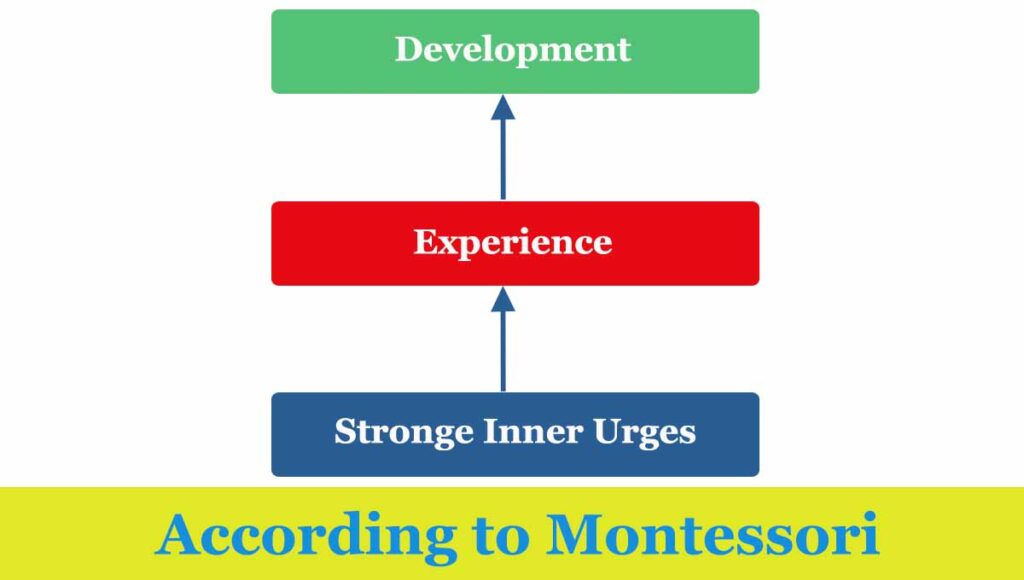
Child develop cognitive skill according to montessori

0 to 6 years are very sensitive years. The whole personality of a child (physically, mentally, socially, and emotionally) develops within 0 to 6 years. A child grows on the basis of this foundation. So as much as this foundation will be strong, your child’s physical, mental, social, and emotional development will be strong.

So don’t take this period easy and keep an eye on each and every movement and development of your child.

Building Tower

building tower montessori activity

5 pieces of tower will be given to make the tower. It can be in different sizes for making it more challenging. This activity will enhance sense of sight, ability to discriminate sizes, and hand and eye coordination.

Sorting Colors

Sorting Colors is montessori activity

You can give different colored beads, blocks, balls, and pencils for sorting. They will put material in baskets according to their colors.

For example, yellow objects will be in yellow baskets, and green objects will be in green baskets.

Puzzles Fixing
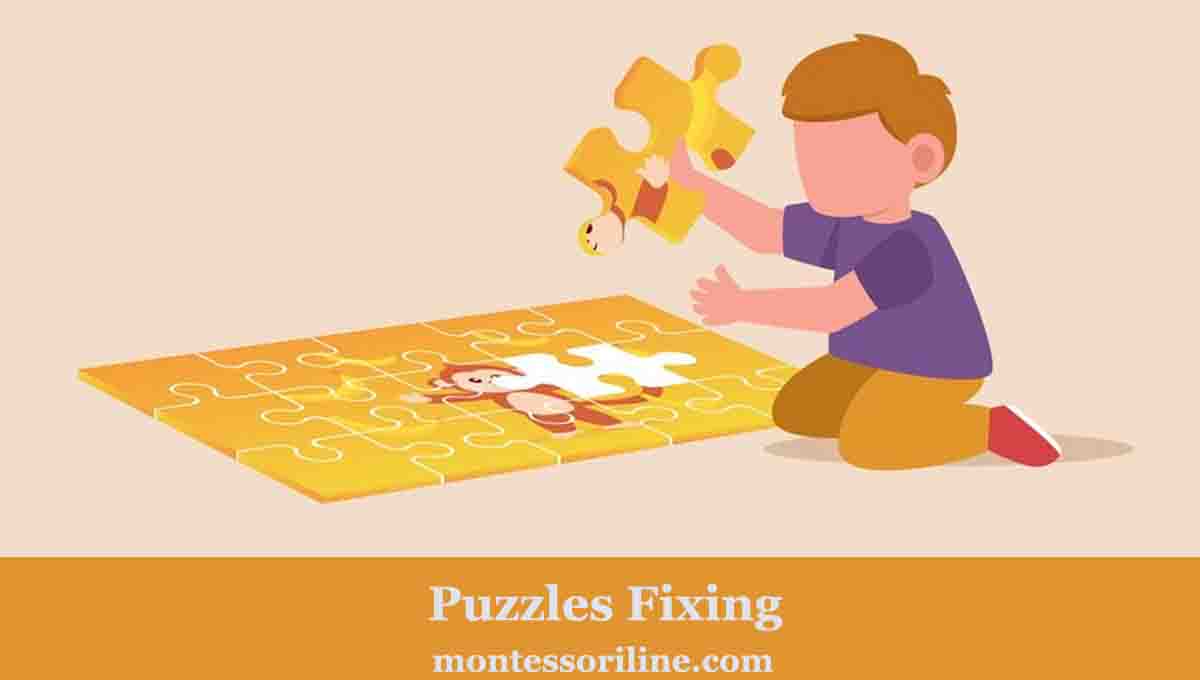
Puzzles Fixing montessori activity

Provide knobbed puzzles to young children so that they can hold pieces properly. Children will place the puzzle according to its place.

Reading Books

Reading Books is montessori activity

Mostly parents think that an 18-month-old child can read a book. He can when we give him exposure to words, letters, and pictures. Letters are just like names of family members and other things.

When we start reading at the early stages, their vocabulary, comprehension, and critical thinking develop, and with time they express all this information effectively.

So plan reading time with 18-month-old kids.

At this stage their minds work like an observing machine. They will observe only that stuff that will be part of their environment.

So make your environment rich so that they can absorb meaningful and effective things. These all are Montessori activities for 18-month-olds.

Also Read:

Montessori Learn to Read

Leave a Comment