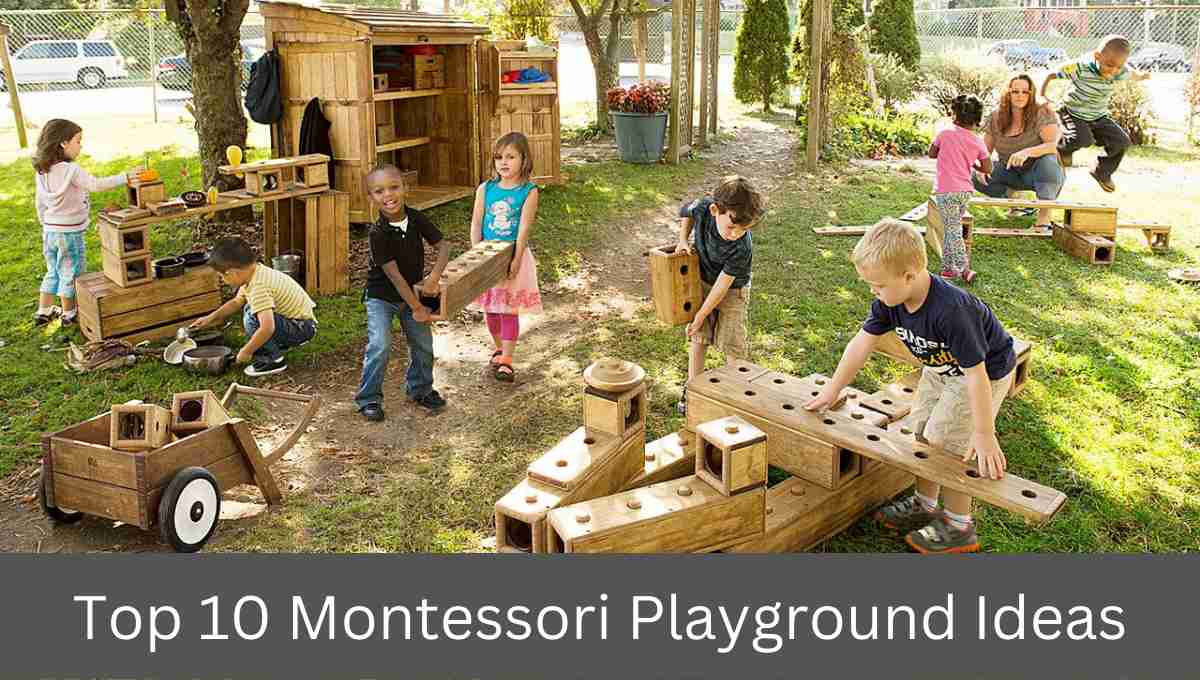
Top 10 Montessori Playground Ideas. Montessori education focuses on providing children with an environment that supports their natural development and fosters independent exploration. Designing a Montessori-inspired playground allows children to engage in purposeful play while nurturing their cognitive, physical, and social skills.
Montessori playground ideas focus on creating outdoor spaces that support independence, movement, sensory exploration, and practical life learning. A strong Montessori playground uses child-sized tools, natural materials, loose parts, and clearly defined zones for climbing, gardening, quiet reflection, and hands-on discovery.
Introduction
A Montessori playground is more than a place for recess. It is a carefully prepared outdoor environment where children can move freely, choose meaningful activities, and build skills through real experiences. For parents, homeschool families, Montessori teachers, and preschool educators, the outdoor space can become one of the richest parts of the day.
In Montessori education, outdoor play is not separate from learning. It is learning. Children pour water, carry materials, balance on logs, plant seeds, observe insects, and work with their hands. These simple activities strengthen focus, coordination, responsibility, and confidence.
🌍 More Available Jobs




This article explores practical Montessori playground ideas for homes, schools, and early childhood settings. It also explains Montessori principles, compares Montessori and traditional outdoor spaces, and shares realistic examples that work in the United States, Canada, the United Kingdom, and Australia.
Why This Topic Matters
Outdoor learning matters because children need movement, beauty, order, and freedom. A well-designed playground supports healthy child development in ways that indoor activities cannot fully replace. It gives children room to test their abilities, solve problems, and connect with nature.
For many families and educators, the challenge is not whether outdoor play matters but how to make it purposeful. Many playgrounds are built around fixed equipment alone. Montessori playgrounds take a different approach. They combine movement with independence, practical life, and sensory learning.
🌍 More Available Jobs


This matters even more today because many children spend more time indoors and in front of screens. A Montessori playground offers a natural balance. It encourages real-world activity, healthy risk-taking, and calm, focused engagement.
Montessori Foundations Related to This Topic
Montessori playground ideas are rooted in the work of Dr. Maria Montessori, who believed that children learn best through meaningful activity in a prepared environment. Outdoor spaces should reflect the same principles found in a Montessori classroom.
The most important foundations include respect for the child, independence, order, movement, and freedom within limits. A child should be able to choose work, repeat an activity, and use materials that are sized and designed for their developmental stage.
Montessori also emphasized the importance of practical life activities. Outdoor environments are ideal for this. Children can sweep, water plants, carry baskets, rake leaves, and care for shared spaces. These simple acts help children feel capable and connected to their environment.
Another key Montessori principle is observation. Adults do not need to direct every movement. Instead, they observe carefully, adjust the environment when needed, and step in only when guidance or safety support is required.
Main Concepts and Explanation
A Montessori playground is intentionally designed to do more than entertain. It should support development across physical, cognitive, emotional, and social areas. The best outdoor Montessori spaces feel calm, ordered, and inviting rather than overstimulating.
The materials should be natural where possible. Wood, stone, sand, water, plants, and fabric work well because they offer rich sensory experiences. These materials also fit Montessori’s preference for beauty, simplicity, and realism.
A good playground does not need to be large or expensive. Even a small backyard, courtyard, or preschool outdoor area can be transformed into a Montessori learning space. What matters is not size alone, but intention.
Definitions
Montessori playground ideas refer to outdoor design concepts that reflect Montessori principles. These ideas may include balance beams, gardening beds, sensory paths, loose parts, climbing logs, mud kitchens, and child-sized practical life tools.
Montessori learning outdoors includes any activity that allows a child to explore, work, and learn through direct experience. This might mean pouring water, sorting stones, planting flowers, or building a structure with wooden planks.
Montessori practical life activities outdoors are real-life tasks children can do in a garden or playground. These include sweeping, wiping tables, carrying tools, watering plants, and caring for shared outdoor areas.
Benefits
Montessori playgrounds offer many developmental benefits. They help children build large muscle strength through climbing, balancing, jumping, and carrying. They also support fine motor control through pouring, scooping, gardening, and handling small natural objects.
These spaces encourage independence. When a child can choose a task and complete it without constant adult direction, confidence grows. Children also develop concentration because they are engaged in purposeful activity instead of passive entertainment.
Social development is another major benefit. Children in shared outdoor environments learn to take turns, negotiate roles, solve problems, and cooperate. These experiences prepare them for school and everyday life.
Challenges
Montessori playground design does come with challenges. One common challenge is balancing freedom and safety. Children need room to explore, but adults must still manage risk carefully.
Another challenge is maintenance. Natural materials such as wood, plants, sand, and water require regular care. Without order and upkeep, the environment can quickly lose its Montessori quality.
Budget and space are also common concerns. Families and schools may want a Montessori playground but assume it requires a large yard or expensive equipment. In reality, thoughtful design can work in small or modest spaces.
Common Misconceptions
One common misconception is that Montessori playgrounds are minimalist to the point of being empty. That is not true. They are intentional, not bare. Every object should have a purpose.
Another misconception is that Montessori outdoor play means children are left completely alone. In fact, adults are still present. The difference is that they guide by observation rather than constant control.
Some people also believe Montessori playgrounds must avoid traditional equipment entirely. That is not necessary. A swing, slide, or climbing structure can still fit within a Montessori environment if it supports independence and purposeful movement.
Practical Applications
A Montessori playground can be organized into zones. One zone might support gross motor play, while another focuses on sensory exploration or practical life work. This structure gives children variety without visual clutter.
At home, parents might use a small balance beam, a gardening area, and a water station. At a preschool, the environment might include a mud kitchen, child-sized rakes, a climbing log, and a quiet reading corner outdoors.
Teachers can use the outdoor area to extend classroom learning. A lesson about plants, weather, insects, or measuring can move naturally outside. This helps children connect abstract ideas with real experiences.
Real-Life Examples
A preschool playground might include a row of raised garden beds, a wheelbarrow station, and a sand table with scoops and funnels. Children can water the plants in the morning and later use natural materials for building and sorting.
At home, a parent might set up a small patio with a basket of leaves, a low table for pouring water, and a few wooden blocks. Even a simple outdoor setup can become a meaningful learning space if the child can use it freely and safely.
In a Montessori kindergarten, the outdoor area may include stepping stones, a compost bin, a rain barrel, and a nature observation table. Children may collect leaves, compare textures, and care for a small herb garden as part of regular routines.
Montessori Education in the United States
Montessori schools in the USA have grown steadily over time, and many families now actively seek Montessori education because of its child-centered approach. Outdoor learning is increasingly valued in American early childhood settings, especially as schools look for ways to support movement, well-being, and independent learning.
A strong trend in the United States is the blending of Montessori with nature-based learning. Many schools now create outdoor classrooms, garden spaces, and loose parts play areas. Parents are drawn to these environments because they see practical learning, calm routines, and greater engagement.
Montessori schools in the USA often emphasize practical life and child choice. A Montessori playground fits this well because it lets children work with their hands, follow their interests, and learn through direct experience.
Montessori Education in Canada
Montessori schools in Canada are widely respected, especially in communities that value bilingual learning, independence, and play-based education. Outdoor learning is especially important in Canada because children often experience varied seasonal conditions, which makes flexible playground design valuable.
Montessori schools in Canada often combine indoor structure with outdoor exploration. Gardens, snow play, sensory trails, and nature observation are common ways to extend learning outside. The environment must be adaptable to weather, which is why durable and simple materials are often preferred.
Parents in Canada often appreciate Montessori because it supports responsibility and calm learning. A well-designed outdoor Montessori space gives children a chance to be active while still learning order, focus, and care for the environment.
Montessori Education in the United Kingdom
Montessori schools in the UK have a strong presence in both private settings and Montessori-inspired early years environments. Outdoor play is a familiar part of early childhood education in the UK, and Montessori playground ideas fit naturally within that culture.
Many UK settings now value open-ended resources, den building, gardening, and forest-school-style experiences. Montessori outdoor spaces align well with these trends because they support exploration without over-structuring play.
In the UK, parents and educators often look for ways to balance academic readiness with emotional and physical development. Montessori playgrounds help by encouraging movement, problem-solving, and social interaction in a calm, purposeful way.
The Montessori Education in Australia
Montessori schools in Australia are well established, and outdoor learning is especially compatible with the country’s climate and educational culture. Many Australian families value open-air play, nature connection, and independent movement.
Montessori playgrounds in Australia often include natural landscaping, native plants, water play, and shaded areas. These design choices support both learning and comfort in warmer conditions.
Australian educators also often appreciate the connection between Montessori principles and respect for the environment. A garden, compost area, or nature-based loose parts station can become a powerful part of early childhood education.
Montessori vs Traditional Education
Montessori and traditional playgrounds both support children, but they do so in different ways. The Montessori spaces are designed to invite meaningful, self-directed activity, while traditional playgrounds often prioritize fixed equipment and recreation.
A Montessori playground is not against fun. It simply defines fun differently. A child building a bridge with planks or watering plants may be learning just as deeply as a child sliding or climbing.
Real-World Examples
A toddler space at home might include a low scoop-and-pour station, a small chalkboard, and a basket of sticks and stones for sorting. The child can move between tasks with freedom while still working within a simple structure.
A preschool might create a mud kitchen with old pots, a water pump, and herb boxes. Children may mix pretend soups, wash vegetables, and care for the space as part of daily routines.
A homeschool family could use a small yard for practical life activities such as sweeping, watering, collecting leaves, or planting seeds. These tasks support Montessori education at home while also making the outdoor area feel active and useful.
A kindergarten setting might include a climbing arch, balance logs, a quiet bench, and a planting station. Children can challenge their bodies, calm their minds, and care for plants all in one outdoor environment.
Benefits
Builds gross motor strength through climbing, balancing, and running.
Improves fine motor coordination through pouring, gardening, and tool use.
Encourages independence and responsibility.
Supports sensory development through varied natural textures and materials.
Helps children focus for longer periods.
Develops problem-solving and decision-making skills.
Strengthens social skills through shared work and cooperative play.
Connects children to nature and seasonal change.
Supports emotional regulation through calm, purposeful activity.
Makes learning feel meaningful and real.
Challenges
Requires ongoing organization and maintenance.
Needs careful safety planning without removing healthy risk.
Can be affected by weather, especially in colder or wetter climates.
May require creative budgeting for families and schools.
Can be misunderstood by adults who expect a more traditional playground model.
Needs regular observation to stay aligned with children’s developmental needs.
May require accessibility adjustments for children with physical or sensory needs.
Common Mistakes Parents Make
One common mistake is buying too many toys and equipment pieces at once. A crowded playground can overwhelm children and reduce their focus. It is better to begin with a few purposeful items and build slowly.
Another mistake is treating the outdoor space like a storage area instead of a learning environment. A Montessori playground should be tidy, attractive, and easy for children to use independently.
Parents also sometimes choose equipment that looks educational but does not invite real use. The best Montessori learning materials outdoors are practical, realistic, and accessible. A child-sized rake or watering can is often more valuable than a decorative object.
Some adults also intervene too quickly. Montessori learning grows when children are allowed to try, fail safely, and try again. Support is important, but overhelping can reduce independence.
Expert Tips
Start with zones rather than trying to build everything at once. A simple outdoor space can include a movement area, a practical life area, and a quiet corner. That is enough to begin.
Use natural materials whenever possible. Wood, stone, sand, water, fabric, and plants create rich sensory experiences and fit the Montessori philosophy well. They also age more naturally than bright plastic structures.
Include real work. Children love doing meaningful tasks. Sweeping leaves, planting seeds, and carrying watering cans may look simple, but they build competence and confidence.
Keep the environment beautiful and orderly. Children are more likely to care for a space that is visually calm and well maintained. Beauty is not decoration in Montessori; it is part of the learning environment.
Observe children closely. Watch what they return to, where they struggle, and what they avoid. Their behavior will help you decide which materials to add, remove, or adjust.
Latest Montessori Trends in 2026
One major trend in 2026 is the continued rise of outdoor classrooms. More schools are using gardens, courtyards, and natural play spaces as part of everyday learning rather than as occasional extras.
Another growing trend is loose parts play. Educators are recognizing that open-ended materials support creativity, cooperation, and problem-solving better than many fixed play objects.
There is also stronger interest in sensory-friendly and inclusive playground design. More families and schools want spaces that support children with different sensory needs and physical abilities.
Nature-based learning continues to grow as well. Educators are using weather, plants, insects, soil, and seasonal changes as part of the curriculum. This fits beautifully with Montessori child development goals.
A final trend is the use of recycled and reclaimed materials. Schools and families are looking for affordable ways to build meaningful environments without unnecessary waste.
Best Montessori Resources for Parents
Books are often the best place to begin if you want a deeper understanding of Montessori learning. The Secret of Childhood by Maria Montessori is foundational for understanding the philosophy behind Montessori education. The Montessori Toddler by Simone Davies is especially helpful for practical home application.
Montessori organizations can also offer guidance. The American Montessori Society is a well-known source for information, training, and school standards. The Montessori Accreditation Council for Teacher Education is another respected authority for teacher preparation.
Families in different regions may also look to Montessori Europe or Montessori Australia for local insight. These organizations can help parents and educators better understand regional practice and community standards.
Online articles, local Montessori schools, and nature-based education groups can also be useful. The best resources are those that combine theory with practical implementation. When possible, look for sources that explain how to apply Montessori teaching methods in daily life.
Frequently Asked Questions
1. What are Montessori playground ideas?
Montessori playground ideas are outdoor design concepts that support independence, movement, sensory learning, and practical life activities through a prepared environment.
2. How do I make a Montessori playground at home?
Start with a simple layout using child-sized tools, natural materials, a small gardening area, and a few movement features such as stepping stones or a balance beam.
3. What materials work best in a Montessori playground?
Wood, stone, sand, water, fabric, plants, and loose parts work well because they are open-ended, natural, and inviting for hands-on exploration.
4. Are Montessori playgrounds safe for toddlers?
Yes, when they are designed with age-appropriate materials, soft surfaces, clear boundaries, and proper adult supervision.
5. Do Montessori playgrounds need expensive equipment?
No. Many effective Montessori outdoor spaces use affordable or reclaimed materials, especially when the design is intentional and child-centered.
6. What is a Montessori loose parts area?
A loose parts area is a space with moveable items such as wooden blocks, stones, ropes, shells, and crates that children can use creatively.
7. How does a Montessori playground support child development?
It supports gross motor skills, fine motor control, concentration, independence, social skills, and sensory growth through real activity.
8. Can I use traditional play equipment in a Montessori setting?
Yes. A swing, slide, or climbing structure can fit well if it is child-sized, safe, and used in a purposeful outdoor environment.
9. What is practical life outdoors in Montessori?
Practical life outdoors includes real tasks such as sweeping, watering plants, raking leaves, planting seeds, and caring for the environment.
10. How do I keep a Montessori playground organized?
Use clearly defined zones, labeled storage, limited materials, and regular cleanup routines so the environment stays calm and usable.
11. What is the best size for a Montessori playground?
There is no single best size. A large school yard and a small backyard can both work if the space is thoughtfully arranged.
12. How often should Montessori playground materials be rotated?
Materials can be rotated weekly or seasonally depending on use, weather, and children’s interests.
13. What makes a Montessori playground different from a regular playground?
A Montessori playground is designed for purposeful work, independence, and learning, not just recreation.
14. Can Montessori playground ideas work in a small yard?
Yes. Even a small yard can include a sensory tray, a mini garden, a balance path, and a practical life station.
15. Are Montessori playgrounds good for preschoolers?
Yes. Preschoolers are at an ideal age for outdoor practical life, movement, and sensory exploration.
16. How do Montessori playgrounds help with focus?
They allow children to repeat meaningful activities in a calm, ordered environment, which strengthens concentration over time.
17. What should I avoid in a Montessori playground?
Avoid clutter, overly plastic materials, too many fixed toys, and spaces that do not allow children to act independently.
18. How do I make a playground more inclusive?
Use ramps, wide paths, sensory calm zones, tactile surfaces, and materials that children with different abilities can use.
19. What are good Montessori playground ideas for schools?
Raised beds, loose parts carts, mud kitchens, balance beams, nature tables, and child-sized gardening tools are all strong options.
20. Why are Montessori playgrounds important?
They help children become capable, confident, and thoughtful learners by connecting movement, nature, and purposeful activity.
Conclusion
Montessori playground ideas are valuable because they turn outdoor space into a true learning environment. With simple materials, thoughtful planning, and respect for the child, you can create a place where children build strength, independence, focus, and joy.
Whether you are designing a school yard, a preschool garden, or a small Montessori homeschool space, the key is to keep the environment purposeful and child-centered. Start with a few well-chosen features, observe how children use them, and grow the space gradually.
A successful Montessori playground does not need to be perfect. It needs to be intentional, beautiful, and alive with meaningful activity. That is what makes it powerful for young children.
Nature Exploration Zone
Dedicate an area in the playground for children to connect with nature. Incorporate elements like a sensory garden, bird feeders, and a small pond. This zone encourages children to observe and appreciate the wonders of the natural world while fostering a sense of environmental responsibility.
Practical Life Station
Create a practical life station equipped with child-sized gardening tools, watering cans, and buckets. This area allows children to engage in real-life activities such as gardening, watering plants, and caring for the outdoor environment. Practical life tasks promote independence, responsibility, and fine motor skills.
Music and Movement Area
Designate a space for music and movement activities. Provide musical instruments, a dance floor, and open space for creative expression. Children can explore rhythm, coordination, and self-expression through music, dance, and imaginative play.
Sensory Play Zone
Incorporate sensory play elements such as sandboxes, water tables, and nature-inspired materials like pinecones and seashells. These tactile experiences stimulate the senses and encourage children to explore, experiment, and develop their cognitive and sensory processing skills.
Art Studio
Set up an outdoor art studio with easels, paint, brushes, and various art materials. This space inspires children to express their creativity, experiment with different art forms, and develop fine motor skills. Encourage them to create nature-inspired artwork using leaves, flowers, and natural dyes.
Outdoor Classroom
Designate an area as an outdoor classroom with comfortable seating and a portable whiteboard or chalkboard. This space facilitates interactive learning experiences, group discussions, and hands-on experiments. Children can learn about various subjects while enjoying the fresh air and natural surroundings.
Climbing and Balancing Structures
Include climbing structures, balance beams, and stepping stones to promote physical development, coordination, and spatial awareness. These elements challenge children to develop strength, balance, and problem-solving skills while building confidence in their physical abilities.
Quiet Reading Nook
Create a cozy reading nook with child-sized furniture, cushions, and a collection of age-appropriate books. This peaceful space encourages children to engage in independent reading, storytelling, and imaginative play. It cultivates a love for literature, improves language skills, and fosters a sense of tranquility.
Construction and Building Zone
Provide construction materials like wooden blocks, planks, and recycled materials for children to build and create their own structures. This area promotes imaginative play, problem-solving, and collaborative skills as children design and construct their own inventions and architectural marvels.
Outdoor Kitchen and Garden
Set up an outdoor kitchen area with child-sized utensils, pots, pans, and a small vegetable garden. Children can engage in pretend cooking, learn about healthy eating, and develop an understanding of where food comes from by tending to the garden. It fosters an appreciation for nature, nutrition, and sustainable practices.
Designing a Montessori-inspired playground goes beyond providing a space for recreational activities. It creates an environment that supports children’s natural curiosity, creativity, and love for learning.
Multi-age interaction in Montessori playgrounds
In Montessori playgrounds, children from different age groups come together to play and learn in a shared environment. Unlike traditional settings that separate children based on their age, Montessori recognizes the value of allowing children of various ages to interact and learn from one another.
Multi-age interaction in Montessori playgrounds brings several benefits for children’s development. Younger children have the opportunity to observe and learn from their older peers who have more advanced skills and knowledge. They can see how the older children engage with materials, solve problems, and interact with others. This exposure to older role models inspires younger children to try new activities and develop their own abilities.
On the other hand, older children in a mixed-age setting have the chance to develop leadership and mentorship skills. They take on responsibilities and become mentors for the younger children. By assisting and guiding their younger peers, older children reinforce their own understanding of concepts and gain confidence in their abilities.
Multi-age interaction in Montessori playgrounds fosters a sense of community and collaboration. Children of different ages learn to interact and cooperate with one another, developing important social skills. They learn effective communication, conflict resolution, and respect for different perspectives.
Multi-age interaction in Montessori playgrounds offers numerous benefits for children’s development. It allows younger children to learn from older ones while providing older children with opportunities to develop leadership skills and empathy. By embracing collaboration and respecting individual differences, multi-age interaction creates a supportive and inclusive learning environment where children thrive both socially and academically.
Benefits of implementing the top 10 Montessori playground ideas
Holistic Development
Montessori playground ideas encompass all aspects of a child’s growth, including physical, cognitive, social, and emotional development. This comprehensive approach ensures that children experience well-rounded development and reach their full potential.
Independence
By encouraging independent activities, Montessori playground ideas foster self-confidence, decision-making skills, and a sense of personal autonomy. Children learn to explore and engage with their surroundings on their own, developing essential life skills.
Creativity and Imagination
Montessori playgrounds provide ample opportunities for creative expression and imaginative play. Through open-ended activities and materials, children can unleash their creativity, enhance problem-solving abilities, and develop divergent thinking skills.
Sensory Stimulation
Sensory elements integrated into Montessori playgrounds create a rich sensory environment. This stimulation supports children’s cognitive development, sensory processing, and overall sensory integration, laying a solid foundation for learning.
Nature Connection
Nature exploration zones within the playground foster a deeper connection with the natural world. Children develop environmental awareness, empathy, and a sense of responsibility towards nature, promoting a sustainable mindset.
Fine and Gross Motor Skills
The top 10 Montessori playground ideas include activities that enhance both fine and gross motor skills. Manipulating tools, climbing, balancing, and engaging in physical play promote the development of motor skills and coordination.
Social Interaction and Collaboration
Montessori playgrounds provide spaces for social interaction, cooperation, and collaboration among children. Through play, children learn important social skills such as communication, empathy, and teamwork, essential for healthy relationships and future success.
Cognitive Development
Hands-on experiences, problem-solving challenges, and exploration of materials in Montessori playgrounds promote cognitive development. Children engage in critical thinking, develop spatial awareness, and hone their logical reasoning abilities.
Language and Literacy Skills
Reading nooks and outdoor classrooms within Montessori playgrounds support language development and literacy skills. Children expand their vocabulary, improve storytelling abilities, and develop a love for literature in an inspiring outdoor environment.
Environmental Consciousness
Montessori playgrounds emphasize sustainable practices, nature exploration, and outdoor learning. By engaging with nature and practicing responsible behavior, children develop an environmental consciousness, becoming stewards of the Earth.
In summary, implementing the top 10 Montessori playground ideas creates an enriching environment that nurtures children’s curiosity, independence, creativity, and love for learning. Through these ideas, children experience holistic development, engage in purposeful play, and develop essential skills that will positively shape their lives.

