
Montessori activities for 4-year-olds are activities and ideas, games, and some ways that you can entertain your kids who are 4 years old.
Young babies are very active, curious, and keen observers. An educationist says that children’s brains in their early years are like observing machines. Every child has his inner urge to provoke him to move and to do something. When a child follows his inner urge and experiences things, then he learns from his experiences.

To stack small objects
We provide small objects like coins, blocks, or rocks to kids so that they can stack them. This activity will develop their hand and eye co-ordination and visual discrimination too.
🌍 More Available Jobs



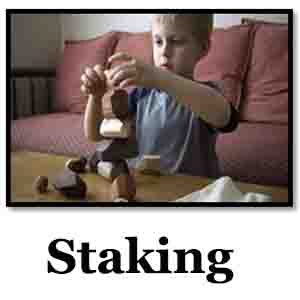
If you look at pictures, children seem focused, which will help them to increase their concentration span.
Montessori Activities for 4 Year Olds
Quick Answer
Montessori activities for 4-year-olds are hands-on, purposeful tasks that build independence, coordination, language, concentration, and practical life skills. The best activities include pouring, sorting, gardening, simple puzzles, cutting, matching, and movement games that let children learn through doing, not just watching.
🌍 More Available Jobs
Montessori Line Scholarship Notification
Never miss a scholarship deadline! Join our channels for daily fully-funded opportunities & instant alerts.




Introduction
At age four, children are naturally curious, active, and eager to participate in real life. This is one of the best ages to introduce Montessori activities because children want to do things for themselves, repeat actions many times, and absorb skills quickly. A well-prepared Montessori environment gives them the freedom to explore while also helping them develop order, confidence, and self-control.
For parents, homeschool families, Montessori teachers, and early childhood educators, this age is especially important. Four-year-olds are beginning to combine independence with stronger language, better coordination, and more complex problem-solving. That makes this a powerful stage for Montessori learning at home and in the classroom.
This article explains practical Montessori activities for 4-year-olds, why they work, how to adapt them for home or school, and what families in the United States, Canada, the United Kingdom, and Australia should know about Montessori education today.
Why This Topic Matters
Four-year-olds are in a sensitive stage of development. They are ready for movement, order, repetition, social learning, and real responsibility. If their environment offers meaningful work, they often stay focused longer and become more cooperative.
This matters because many children at this age are given too many passive activities. Screens, noisy toys, and overstructured lessons can limit the natural drive to explore. Montessori activities restore balance by giving children concrete work that is both simple and deeply educational.
Parents often notice that when a child is given real tasks, behavior improves. Teachers see the same thing in a Montessori classroom. Children become more settled when they can pour, clean, build, sort, and care for the environment. These tasks help meet developmental needs that are often overlooked.
Montessori Foundations Related to This Topic
Montessori activities for 4-year-olds are based on Dr. Maria Montessori’s belief that children learn best through purposeful activity in a prepared environment. She observed that children are drawn to repetition, order, independence, and work that matches their stage of development.
The Montessori approach at age four focuses on practical life, sensorial work, language, movement, and early math. The child is not pushed into abstract learning too early. Instead, they build strong foundations through direct experience.
At this age, the adult’s role is not to entertain. It is to prepare the environment, demonstrate carefully, observe progress, and allow the child to work independently as much as possible.
Main Concepts and Explanation
A Montessori activity is not just a task that keeps a child busy. It is an activity that has a clear purpose, a beginning and end, and a built-in opportunity for concentration and independence. For a 4-year-old, this might be pouring water, using tongs, matching shapes, or washing a table.
The best Montessori learning materials are simple, attractive, and realistic. They invite the child to handle objects directly and make discoveries through repetition. This is why Montessori classrooms and Montessori homeschool spaces often use wood, glass, metal, fabric, and natural materials instead of flashy plastic items.
At this age, children are not just practicing skills. They are building identity. Each successful activity tells the child, “I can do this myself.” That sense of competence is one of the most valuable outcomes of Montessori child development.
Definitions
Montessori activities for 4-year-olds are hands-on learning experiences designed to support independence, movement, concentration, and practical understanding. They can be used in a Montessori classroom, preschool, kindergarten, or Montessori education at home.
Montessori practical life activities are everyday tasks adapted for children, such as pouring, sweeping, washing, folding, setting the table, watering plants, and caring for materials.
Montessori learning refers to child-centered education where children learn through direct experience, guided by an adult who prepares the environment and observes carefully.
Benefits
Montessori activities offer many benefits for 4-year-olds. They build hand-eye coordination, which is important for writing, dressing, and using tools. They also strengthen concentration because children focus deeply when a task is meaningful and manageable.
These activities support independence. A child who can dress, clean, pour, and sort is less dependent on adult help for simple daily tasks. That independence often leads to better confidence and smoother routines at home and in school.
They also support social development. When children work in a Montessori classroom or Montessori preschool, they learn to wait, share space, take turns, and respect others’ work. These are important early childhood education skills that support later learning.
Challenges
One challenge is that adults sometimes underestimate what a 4-year-old can do. They may give activities that are too easy or too childish. The result is boredom and less engagement.
Another challenge is choosing the right level of difficulty. If an activity is too hard, the child may become frustrated. If it is too simple, there is little growth. Montessori teaching methods rely on careful observation to strike the right balance.
A third challenge is consistency. Children need repeated access to the same materials. A Montessori activity is most effective when the child can return to it many times over days or weeks.
Common Misconceptions
A common misconception is that Montessori activities are only academic. In fact, practical life, movement, and sensory work are just as important as letters and numbers.
Another misconception is that children need constant adult correction. In Montessori, the goal is to guide gently and let the child learn through experience. Too much correction can interrupt concentration.
Some people think Montessori is only for schools. That is not true. Montessori activities for 4-year-olds can work beautifully in a home, apartment, backyard, or homeschool setting.
Practical Applications
At home, a 4-year-old can wipe a table, sort socks, water plants, peel a banana, or transfer objects with tongs. These are simple tasks, but they build concentration and useful life skills.
In a Montessori preschool, the child might use counting rods, sandpaper letters, metal insets, or sound games. These learning materials prepare the mind and hand for more complex work.
In kindergarten, children may begin longer activities such as timeline work, nature journaling, sentence building, or simple science observation. The idea is to grow gradually without rushing the child.
Real-Life Examples
A parent sets up two small pitchers and a tray. The child practices pouring water from one pitcher to another without spilling. Over time, the child repeats the activity until they can do it smoothly and confidently.
A Montessori teacher places a tray with tweezers, pom-poms, and bowls on a low shelf. The child uses the tweezers to transfer objects from one bowl to another, strengthening fine motor control.
A homeschool family creates a morning basket with practical life work, a simple puzzle, a matching activity, and a small snack prep station. The child rotates through the materials at their own pace.
Montessori Education in the United States
Montessori schools in the USA continue to attract parents who want more independence, less screen dependence, and stronger hands-on learning. Many American families appreciate that Montessori education blends academic growth with life skills and emotional development.
Current trends in the United States include more interest in outdoor classrooms, practical life work, and mixed-age group learning. Parents also want learning that feels calmer and more purposeful, especially for preschool and early elementary years.
Educational relevance is high because many Montessori activities align well with school readiness goals. Four-year-olds can develop literacy, math, concentration, and self-care skills in ways that feel natural and joyful.
Montessori Education in Canada
Montessori schools in Canada are popular with families looking for a balanced, child-centered approach. Canadian parents often value independence, social development, and strong early childhood education foundations.
In Canadian Montessori settings, teachers often adapt activities to seasonal changes. Indoor practical life work is especially useful during winter months, while spring and summer bring gardening, nature study, and movement activities.
Montessori learning at age four is particularly useful in Canada because children can build self-help skills and daily routines that support school readiness and confidence.
The Montessori Education in the United Kingdom
Montessori schools in the UK have a long tradition of early childhood learning that values independence and structure. Parents often seek Montessori because it feels both practical and respectful of child development.
In the UK, Montessori classrooms often emphasize language, phonics, practical life, and sensorial exploration. Four-year-olds benefit from this because they are ready for more refined hand work and stronger language development.
Montessori activities also fit well with the UK’s interest in early years development and play-based learning. Children are encouraged to engage deeply rather than move quickly from one distraction to the next.
Montessori Education in Australia
Montessori schools in Australia are widely respected and often align well with outdoor learning and child independence. Many Australian families appreciate the Montessori focus on nature, movement, and self-directed learning.
For 4-year-olds in Australia, Montessori activities can easily include outdoor practical life, water play, nature sorting, gardening, and sensory work. These experiences match both Montessori philosophy and many local early learning priorities.
Parents and educators in Australia often want children to develop confidence and resilience. Montessori activities help by giving children real responsibilities and opportunities to solve manageable problems on their own.
The Montessori vs Traditional Education
Montessori and traditional early education both aim to support children, but they differ in structure and learning style. The Montessori method gives children more freedom within a prepared environment, while traditional programs often rely more on teacher-led instruction and group pacing.
Montessori is not “better” in every situation, but it offers a strong approach for children who learn best through direct experience. For many 4-year-olds, that is exactly how they thrive.
Real-World Examples
At home, a child can practice setting the table with a child-sized plate, cup, and spoon. This may look simple, but it supports coordination, sequence, and responsibility.
In a Montessori preschool, the teacher may offer a tray with buttoning work, a color sorting activity, or a counting exercise with beads. The child chooses the work and repeats it as long as interest remains.
In a Montessori kindergarten, the child may begin sandpaper letter work, basic phonics games, and number rods. These materials bridge practical experience and academic readiness in a gentle way.
A homeschool family might create a weekly rotation of Montessori activities for 4-year-olds: Monday for pouring, Tuesday for language, Wednesday for movement, Thursday for art, and Friday for gardening. This keeps learning structured without becoming rigid.
Benefits
Builds independence and self-confidence.
Improves concentration and attention span.
Strengthens fine motor and gross motor skills.
Supports language development.
Encourages problem-solving and decision-making.
Creates order and routine.
Helps children enjoy learning.
Supports early math and literacy readiness.
Promotes emotional regulation.
Makes daily life more cooperative and calm.
Challenges
Some children need more time to adapt to independent work.
Adults may interrupt too quickly instead of observing first.
Activities can become stale if materials are not rotated thoughtfully.
Families may feel pressure to focus too early on formal academics.
It can be difficult to maintain order in busy home environments.
Some children need extra support for sensory or motor challenges.
Common Mistakes Parents Make
One common mistake is giving too many activities at once. A 4-year-old does not need a crowded shelf. A few well-chosen materials are more effective than many scattered options.
Another mistake is choosing activities that look educational but do not truly build skills. For example, a busy worksheet may seem productive, but a real pouring or sorting task often teaches more.
Parents also sometimes do the task for the child. In Montessori, the child should be allowed to struggle appropriately. The adult can demonstrate and support, but the child should do the work.
Another mistake is not observing the child. Montessori teaching methods depend heavily on observation. If a child is losing interest or avoiding an activity, it may be time to change the presentation or difficulty.
Expert Tips
Choose activities that have a clear purpose. Children respond well when they can see what the task is for.
Keep materials attractive and accessible. A tray on a low shelf often works better than a toy box full of mixed items.
Use real tools whenever possible. Small pitchers, child-safe knives, tongs, brooms, and cups help children feel capable and respected.
Repeat successful activities. Repetition is not boredom in Montessori; it is part of mastery.
Follow the child’s interests. If a child is fascinated by water, offer pouring, washing, and watering activities. If the child enjoys movement, add balance, carrying, and outdoor work.
Latest Montessori Trends in 2026
One major trend in 2026 is the growth of Montessori education at home. More families are creating simple, practical setups that support daily routines and independence.
Another trend is the increased use of nature-based and outdoor Montessori activities. Families and schools are seeing the value of gardening, walking, sorting natural materials, and observing seasonal changes.
There is also stronger interest in sensory-friendly Montessori environments. Many educators are adjusting materials and presentation styles to better support children with sensory processing needs.
Technology is being used more carefully. Some Montessori schools now use digital tools for documentation, teacher planning, or parent communication, but not as a replacement for hands-on learning.
A final trend is the rise of hybrid learning models. Families want flexible Montessori homeschool options, part-time Montessori preschool experiences, and home routines that match classroom principles.
Best Montessori Resources for Parents
For books, many parents start with The Montessori Toddler by Simone Davies, which explains practical home application clearly. Montessori from the Start by Paula Polk Lillard and Lynn Lillard Jessen is also widely respected.
For foundational understanding, Maria Montessori’s original writings remain important. Her work helps adults understand the deeper principles behind the materials and methods.
For organizations, the American Montessori Society is a major reference point in the United States. The Montessori Accreditation Council for Teacher Education is also a trusted authority for teacher preparation and program quality.
For an international perspective, Montessori Europe and Montessori Australia offer useful information for families and educators. These organizations help connect the philosophy with current practice.
For online learning, Montessori blogs, school websites, and educator training platforms can offer practical ideas. The best resources combine theory, examples, and realistic classroom or home application.
Frequently Asked Questions
1. What are the best Montessori activities for 4-year-olds?
The best Montessori activities include pouring, sorting, puzzles, gardening, cutting, matching, movement work, and simple practical life tasks.
2. How many Montessori activities should I offer at once?
Offer a few carefully chosen activities rather than many options. Too much choice can overwhelm a 4-year-old.
3. Are Montessori activities good for preschoolers?
Yes. Four-year-olds are at an ideal age for Montessori practical life, sensorial, language, and early math work.
4. Can I do Montessori at home without special materials?
Yes. Many Montessori activities can be created with household items, trays, pitchers, cloths, tongs, and natural objects.
5. What is a Montessori practical life activity?
A practical life activity is a real-world task such as pouring, sweeping, washing, folding, or preparing food that helps children build independence.
6. How do Montessori activities help child development?
They support concentration, coordination, independence, language, motor skills, and emotional confidence.
7. Do Montessori activities replace play?
No. They are a form of purposeful play and work that is deeply engaging for young children.
8. What should a Montessori classroom for 4-year-olds include?
It should include practical life materials, sensorial work, language activities, math materials, art, movement, and clear organization.
9. Are Montessori activities suitable for homeschool families?
Yes. Montessori homeschool setups work very well when the environment is simple, orderly, and child-centered.
10. How do I know if an activity is age appropriate?
It should be challenging but manageable, interesting, and connected to a real skill the child can practice independently.
11. What is the role of the adult in Montessori learning?
The adult prepares the environment, demonstrates the activity, observes, and steps back so the child can learn through experience.
12. Can Montessori help with behavior?
Yes. Many children become calmer and more cooperative when they have meaningful work and consistent routines.
13. Should 4-year-olds do worksheets in Montessori?
Worksheets are usually not central in Montessori. Hands-on materials are preferred because they give direct sensory and motor experience.
14. How often should activities be repeated?
As often as the child wants. Repetition is important because it helps build mastery and concentration.
15. What are some easy Montessori activities for beginners?
Pouring beans, spooning objects, matching socks, simple puzzles, opening and closing containers, and watering plants are all good starting points.
16. How do I keep my child interested in Montessori work?
Rotate materials, observe interests, and offer activities with a clear purpose and attractive presentation.
17. Are Montessori activities expensive?
They do not have to be. Many useful activities can be made from affordable or household materials.
18. How do Montessori schools differ in the USA, Canada, the UK, and Australia?
The philosophy is similar, but local curriculum expectations, climate, and educational culture may shape daily practice.
19. Can Montessori activities support early reading and math?
Yes. Language games, sandpaper letters, number work, counting materials, and sequencing activities all build readiness.
20. What is the most important Montessori principle for 4-year-olds?
Respect for the child. When children are treated as capable learners, they usually rise to meet the expectations.
Conclusion
Montessori activities for 4-year-olds are powerful because they match the child’s natural need for independence, movement, and meaningful work. The best activities are simple, purposeful, and repeated over time. They help children grow in confidence, concentration, and practical skill.
Whether you are a parent, homeschooler, or teacher, you do not need a perfect classroom to begin. A few carefully chosen materials, a calm environment, and a respectful approach can make a big difference. Start with practical life, add sensorial and language work, and observe what your child enjoys most.
Montessori learning is most effective when it feels real. For a 4-year-old, that means hands-on experiences, child-sized tools, and work that truly matters.
Blind Fold Activities
Many activities are given regarding blindfold games. Blindfold games involve different skills and senses. These activities are beneficial for the cognitive development of a 4-year-old child.
Sorting cups from most weight to least weight objects

4 different cups having different objects of different weights. They have to sort them from the most weight to the least weight. This activity will develop decision power as well as the skill of estimation. After sorting objects, children put the blindfold off and check their work. They correct their mistakes too.
Touch and feel objects according to the texture, shapes, weight and material

Take different objects from the house. You can put them in a bag or basket. Children will put the blindfold on their eyes; they will touch and feel the objects and tell about the objects. What does it feel like according to the shape, texture, and material? It develops a sense of touch.
Find objects by following the adult’s instructions
In this blindfold activity an object is placed in a specific place, and the child has to follow the adult’s instruction, which will lead him to the object. This activity will develop listening skills, and children will start to follow instructions given by adults.
To Guess the taste
We need edible things and a blindfold. Before activity, the child will see and tell the names of the eatable things. Then the child will use a blindfold and taste an eatable thing. He will tell the name of food and taste as well like sweet, sour, salty, spicy, etc.
This activity will develop sense of taste as well as vocabulary as child will tell taste of foods, so vocabulary will be increased, like sweet, salty, spicy, sour, etc.
Unscrew battery compartments

Give different objects to children and let them unscrew the objects. For years children loved to open and close the things. They have curiosity to see inside the objects. This activity develops hand-eye coordination.
Re-placing batteries
 Get things from around the house that can be part of it easily. For example, a flashlight allows them to take part, to put the batteries out, and to put them back together. In this way they can learn how things work as well as they will through their experiences.
DIY reusable paint station

We need a piece of cardboard to draw something on it. It’s better if you draw a favorite picture of your kid.
- Girls love to put makeup on their faces. Draw a face so that they can apply different shades of lipstick, blush, and eye shadow. You can draw hands so that they can apply nail paint. Once you draw a picture, put a plastic sheet on cardboard and get it fixed with scotch tape. In this way DIY paints can be reused at a time. Paints can be wiped away easily from the plastic sheet, and a variety of colors can be used.
For a picture that provides an opportunity for creativity. - For boys we can draw fire engines or any kind of transport and then they can change their colors
- We can draw letters or numbers on cardboard, and children make their own designs inside them. This activity will create an image of letters and numbers in the mind of the kid, which will make identification of letters and numbers easy for a 4-year-old child. They will be able to write letters and numbers easily on papers. This activity will develop fine motor skills, creativity, imagination, writing skills, and artistic sense (effective use of different colors and knowledge of color combinations).
Use of Toilet Rolls

Take toilet paper rolls and tape them onto the wall and allow your child to drop different objects through them.
We can take this project a little bit further for the learning aspect. So we can use things of different weights. Before dropping these objects through the rolls, record the child record weight of each object with the help of an adult. So we need a digital weight machine tool.
We can talk about which objects move faster and heavier ones later. The child will observe the speed and time while dropping the object through the toilet paper.
Through this activity, children learn about heavy, light objects… Children observe heavy things move slower than light objects. They can count objects. They learn how to use a weight machine and record weights.
Their critical thinking, observational skills, problem-solving skills, and mathematical skills are developed with this activity.
Get them involved in the kitchen
A child should be told about harmful and dangerous items and safety rules before entering the kitchen.
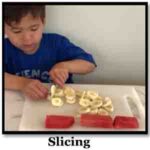
- Slicing is the best activity for a 4-year-old child. If you don’t want to give them a sharp knife, then you can use a plastic knife. They can cut cheese, butter, and bananas.

- Pouring and measuring milk gives opportunities for hand and eye coordination and measuring levels of milk, water, juice, etc.
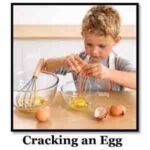
- Cracking an egg is a very interesting activity for kids. It’s a great skill to know how much power you need to crack an egg.
Weaving
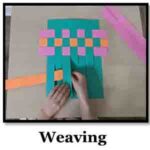
For this activity we need a piece of chart paper. Firstly, draw lines on it. After drawing straight lines, cut them, but the important thing is that we have to leave places on 4 sides of the paper and will not cut them. Give strips of paper to a child to weave. This one will develop concentration span and fine motor skills.
Threading Beads
It is a very simple and easy Montessori activity for a 4-year-old child. We required a thread and different colored beads. But keep this thing in mind: the size of the bead should be bigger so that the child cannot swallow it. The child will thread beads and place them in a row. We can extend this activity in this way: after threading beads, the child should count the beads and see which child has threaded more beads.
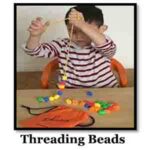

This Montessori activity is beneficial for a 4-year-old child because it is very helpful for effective fine motor development and hand and eye coordination. The child will learn counting too.
Also Read: