How Can Montessori Education Promote Social Justice?
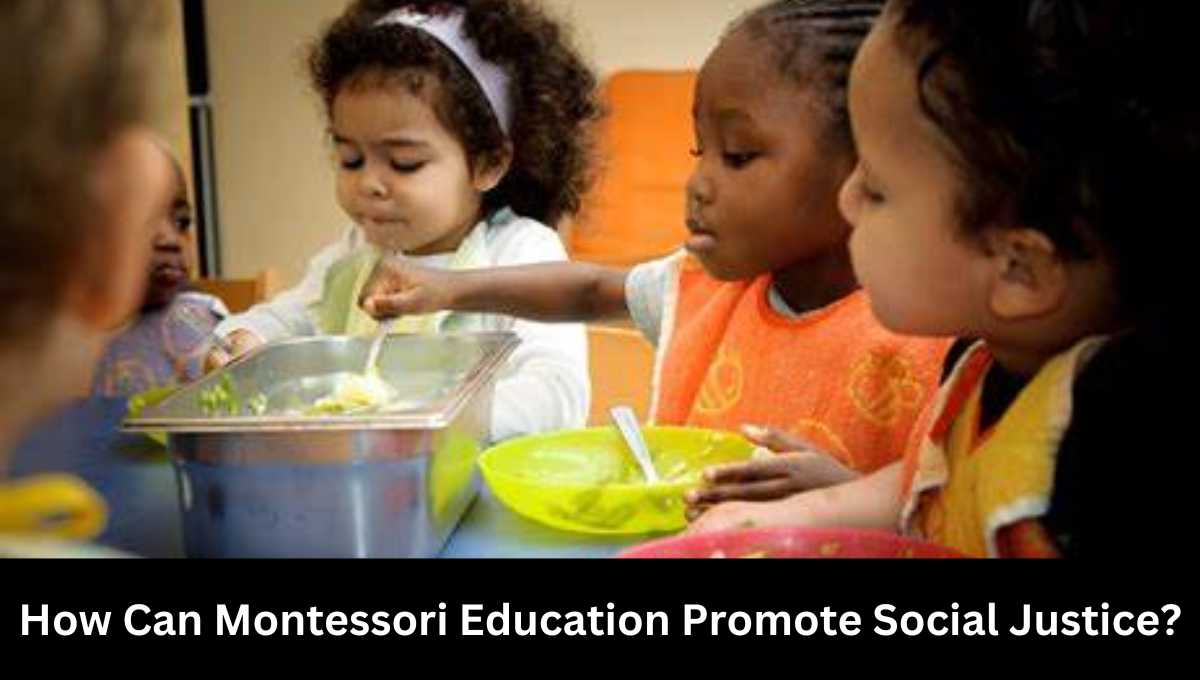
How can Montessori education promote social justice? Means that every kid should have the same chances and be treated fairly, no matter where they come from, their skin color, if they’re a boy or a girl, or anything else that makes them unique. It’s like making a school where all kids feel important, liked, and part of the group.
In a classroom, social justice means:
Respect for Diversity
Teachers help children understand and appreciate differences among people. This could include differences in skin color, culture, language, abilities, and more. Everyone is treated with kindness and fairness.
Inclusion
The classroom is a safe and comfortable place where every child’s ideas and opinions are listened to. In the classroom, everyone is invited to join in and take part in activities. Nobody is left out or made to feel like they don’t fit in.
Fairness
Teachers ensure that all students have access to the same learning opportunities. They make sure that no child is treated better or worse based on things like their family background or how they look.
🌍 More Available Jobs




Understanding Injustice
Children are encouraged to learn about instances where people have been treated unfairly or unjustly in history or in the world today. This helps them develop empathy and a sense of responsibility to make the world a better place.
Problem-Solving
Students are taught to recognize and address unfair situations. They learn to think critically about how they can contribute to making things more just and equal, both in the classroom and in the larger community.
Cooperation
Children work together on projects and activities, learning to collaborate and appreciate each other’s strengths. This helps build a sense of community and shows that everyone’s contributions are valuable.
🌍 More Available Jobs


Empowerment
Students are encouraged to have a voice and make choices in their learning. This helps them develop a sense of agency and the confidence to stand up for what’s right.
Importance of integrating social justice into educational frameworks
Integrating social justice into educational frameworks is really important because it helps make sure that everyone gets a fair chance to learn and succeed.
Following are some valuable aspects:
Fairness for All
When we include social justice in education, it means treating all students with kindness and giving everyone the same chances. This ensures that nobody is left out or treated unfairly.
Learning About the World
Social justice helps students learn about the world around them, including the history of how some people have been treated unfairly because of things like their skin color or where they come from. This helps students become aware of these issues and work towards making things better.
Empathy and Understanding
Learning about social justice helps students understand what it’s like to be in someone else’s shoes. This makes them more caring and helps them treat others with respect, even if they’re different.
Problem-Solving Skills
When students learn about social justice, they also learn how to solve problems in fair ways. They can figure out ways to make things more equal and just for everyone.
Building Strong Communities
Social justice education brings students together and shows them that they’re all part of a big community. This helps them work together, support each other, and make their school and the world a better place.
Preventing Unfairness
When students understand what’s fair and unfair, they can speak up and take action if they see something wrong happening. This helps stop unfairness from continuing.
Confidence and Leadership
Learning about social justice gives students the confidence to stand up for what’s right. They can become leaders who make positive changes in their schools, communities, and even the world.
The Intersection of Montessori Education and Social Justice
The intersection of Montessori education and social justice is where the ideas of fairness and equal opportunities from social justice come together with the teaching methods and principles of Montessori education. Here’s what it means:
Equal Respect for All
In Montessori classrooms, every student is respected and valued for who they are. This matches the social justice idea that everyone should be treated fairly and with dignity, no matter their background.
Individualized Learning
Montessori education focuses on each student’s unique learning pace and interests. This connects with social justice by recognizing that every student has different needs and strengths, and they should all have a chance to learn in a way that suits them.
Inclusion and Diversity
Montessori classrooms often have students from different backgrounds, cultures, and abilities. This diversity is an essential part of social justice, as it teaches children to appreciate differences and work together harmoniously.
Empowerment and Voice
Both Montessori and social justice encourage students to have a voice in their education and community. Montessori promotes independence and responsibility, while social justice empowers students to stand up for fairness.
Challenging Stereotypes
Montessori education challenges stereotypes by allowing students to explore and learn without being limited by expectations based on things like gender or cultural background. Social justice aims to break down these stereotypes too.
Critical Thinking
Both Montessori and social justice encourage critical thinking. Montessori helps students think for themselves, while social justice education encourages them to think about why and how some people might be treated unfairly.
Building Caring Leaders
Montessori and social justice together help create students who care about making the world a better place. They develop into responsible, compassionate leaders who work for equality and justice.
Incorporating Social Justice into Montessori Practices
Incorporating social justice into Montessori practices means bringing ideas of fairness and equality into the way Montessori classrooms are run.
Diverse Learning Materials
Montessori classrooms can include books, activities, and materials that celebrate different cultures, histories, and experiences. This helps students learn about the world’s diversity and understand different perspectives.
Inclusive Lesson Plans
Teachers can design lessons that highlight the importance of treating everyone with respect. This could involve stories, discussions, or projects that show how to be kind to others and stand up against unfairness.
Open Conversations
Creating a safe space where students can talk about topics related to social justice is important. Teachers can encourage discussions about fairness, equality, and historical events to help students develop critical thinking.
Role Models
Introduce students to people who have worked for social justice, like civil rights leaders or activists. Learning about these role models can inspire students to make positive changes themselves.
Problem-Solving Activities
Teachers can create activities that challenge students to think about real-world issues and how to solve them fairly. This encourages critical thinking and empathy.
Community Involvement
Connecting classroom learning to community projects can show students how they can make a difference. This could be through volunteering or advocating for causes they care about.
Empathy Building
Montessori’s focus on individual needs can extend to emotional needs too. Teachers can guide students to understand how others might feel in certain situations, fostering empathy and understanding.
Exploring Injustices
Students can learn about historical events where unfairness and discrimination occurred. This helps them understand the importance of working towards a just society.
Collaboration and Cooperation
Montessori emphasizes teamwork, and students can collaborate on projects that promote social justice. This teaches them that working together can lead to positive change.
Everyday Actions
Teachers can model behaviors like kindness, inclusion, and respect in their interactions with students. This helps students see these values in action.
How Can Montessori Education Promote Social Justice?
Education serves as the bedrock of human dignity and social transformation. When we re-examine educational models through an equity lens, the link between child development and structural fairness becomes evident. Discovering how Montessori education social justice frameworks intersect reveals a powerful model for global equity.
Historical Foundations of Maria Montessori’s Peace and Social Justice Philosophy
Dr. Maria Montessori began her groundbreaking work in the working-class district of 1907 San Lorenzo, Rome. Serving marginalized children at the original Casa dei Bambini, she recognized that early childhood intervention could dismantle systemic poverty. Her early research linked human development directly with equal opportunity for all children regardless of background.
Her pioneering child advocacy challenged rigid social structures of the early twentieth century. Working within a challenging historical context, she championed human rights and advocated for women’s rights and child protection. Her work demonstrated that every child possesses universal dignity that traditional schooling often neglects.
During the rise of European totalitarianism, her fascist resistance led to the closure of her schools. Refusing to compromise her principles of pacifism, she advocated for an anti-war movement rooted in classroom practices. She believed true peace requires a complete educational reform focused on the child’s natural potential.
Recognizing the need for global harmony, she developed the concept of cosmic education. This framework teaches children the interdependence of all living things and fosters international understanding. Her efforts earned her distinction as a three-time Nobel Peace Prize nominee during her lifetime.
Through peace education, children learn social responsibility and develop deep empathy for others. By aligning moral development with holistic development, this educational philosophy creates lasting social change. It addresses systemic inequality by equipping young minds to build global citizenship from the ground up.
Core Montessori Principles Supporting Diversity, Equity, and Inclusion
At the heart of the methodology lies self-directed learning, which honors each child’s unique pace and interest. In mixed-age classrooms, younger and older children collaborate, building strong communities based on shared success. This cooperative setting replaces competitive grading with intrinsic motivation, encouraging deep intellectual curiosity and collaboration.
Honoring individual growth allows educators to support diverse learning styles and neurological profiles. By actively celebrating neurodiversity, classrooms create an inclusive environment where every student thrives. This genuine child-centered approach ensures that no child feels left behind or marginalized.
To guarantee equitable access, classrooms utilize physical and conceptual tools tailored for all abilities. Integrating universal design for learning ensures that every child engages meaningfully with the curriculum. From practical life activities to multi-sensory math exercises, learning remains tactile and universally accessible.
Hands-on sensory materials bridge language and cultural gaps, allowing non-native speakers to grasp abstract concepts quickly. Working alongside peers cultivates social cohesion and mutual appreciation across cultural boundaries. Children develop mutual respect by managing shared spaces and participating in group decision-making exercises.
Students practice collaborative problem solving when addressing daily classroom challenges together. Modern schools integrate an anti-bias curriculum to actively question stereotypes and historical inaccuracies. Paired with culturally responsive teaching, lessons reflect the rich backgrounds of every family represented.
Promoting structural equity requires re-evaluating classroom demographics and institutional policies. Schools that embrace socio-economic diversity create richer learning environments for all enrolled families. Nurturing learner autonomy helps students reach critical developmental milestones while feeling valued for who they are.
Prepared Environment as a Tool for Equity and Social Transformation
The concept of the prepared environment acts as an active teacher within the classroom ecosystem. Thoughtfully organized shelves hold accessible materials designed to promote complete freedom of choice within boundaries. This structure fosters early independence, helping children take ownership of their personal learning journeys.
Childhood autonomy generates a natural sense of community responsibility among young learners. Through daily practical life exercises, students clean, organize, and care for their shared physical spaces. Utilizing shared resources teaches children that community well-being depends on equal access and respectful stewardship.
Eliminating high-stakes testing cultivates a non-competitive learning atmosphere built on intrinsic accomplishment. Removing artificial rankings fosters lasting social harmony and deep peer friendships across background differences. The resulting classroom culture prioritizes collective growth over individual rivalry.
Ensuring full physical accessibility allows children of all physical abilities to move freely throughout the room. Practicing equity in practice means tailoring support so every student receives what they need to succeed. Uninterrupted work periods encourage genuine child-led exploration, strengthening concentration and internal discipline.
Children learn self-regulation through freedom within boundaries, developing emotional intelligence and poise. Classrooms operate on fundamental democratic principles, where every student has a voice in community meetings. When disagreements arise, teachers utilize conflict resolution tools that promote mutual understanding.
Applying restorative justice practices helps repair relationships rather than relying on punitive measures. Through daily lessons in grace and courtesy, children learn to respect personal boundaries and practice active inclusion. The deliberate spatial design of the room transforms it into an empowering learning community.
This collaborative space invites students from diverse backgrounds to learn from one another daily. Families exploring higher education opportunities for teaching find these environmental principles vital for modern classrooms. Investing in quality teacher preparation creates transformative spaces across public and private educational sectors.
Cultivating Anti-Bias and Anti-Racist (ABAR) Pedagogy in Montessori Classrooms
Integrating ABAR education into daily practice requires deliberate reflection and active curriculum design. Educators must move beyond superficial cultural celebrations to build genuine anti-bias, anti-racist learning environments. Developing racial literacy helps young children understand human differences with curiosity, respect, and accuracy.
A child’s positive identity development flourishes when their culture and heritage are visibly honored. Teaching critical consciousness empowers students to spot fairness and unfairness in stories and daily situations. Aligning daily activities with a comprehensive social justice curriculum fosters systemic awareness from an early age.
Proactively mitigating stereotype threat ensures students feel confident in their academic potential. Prioritizing authentic representation in literature provides mirrors for all children and windows into diverse life experiences. Building cultural competence allows children to navigate a complex, multicultural world with ease and empathy.
Understanding how systemic racism shapes historical and modern institutions prepares students for meaningful civic life. Developing privilege awareness helps children recognize social advantages and advocate for fairness. Selecting inclusive materials ensures that classroom displays reflect global human diversity accurately and respectfully.
Continuous educator reflection allows teachers to identify and unpack their own unconscious biases. Effective bias mitigation requires ongoing professional development and courageous conversations among school staff. Encouraging social action empowers children to respond actively when they observe bias or exclusion.
Advocating for true equity in education means removing institutional barriers that limit child potential. Elevating marginalized voices enriches the academic discourse for every student in the classroom. Facilitating ongoing intercultural dialogue deepens mutual respect among students, staff, and surrounding neighborhood families.
Raising microaggression awareness helps prevent subtle harms and maintains a safe classroom community. Implementing an inclusive pedagogy ensures every instructional decision honors the dignity of all learners. These foundational steps prepare students to navigate broader societal contexts with confidence and fairness.
Empowering Children as Autonomous Global Citizens and Agents of Change
True education extends beyond classroom walls to cultivate lifelong youth empowerment and leadership. Engaging students in age-appropriate civic engagement teaches them that their actions matter today. Organically designed social action projects allow young learners to address real-world challenges in their communities.
Participating in meaningful community service connects classroom learning to surrounding neighborhood needs. Students exploring environmental justice investigate local ecosystems, resource consumption, and sustainable waste reduction. Developing critical thinking skills enables children to analyze complex problems and propose creative solutions.
Building ethical leadership qualities prepares students to stand up for human rights throughout their lives. Fostering empathy-building activities helps children understand diverse perspectives and respond with compassion. Cultivating a broad global awareness connects local classroom issues to broader international human movements.
Strong student agency allows learners to choose research topics that align with their ethical passions. Engaging directly in peacebuilding teaches students how to mediate disputes and build consensus nonviolently. Supporting social activism empowers young people to draft petitions, write letters, and organize community initiatives.
Lessons in sustainable development highlight the connection between environmental health and human well-being. Deepening human rights education instills a firm commitment to universal dignity and legal protections. Embracing intergenerational learning connects students with community elders, sharing wisdom and building social trust.
Students discover that collective responsibility builds stronger, more resilient communities than isolated individualism. Learning active listening techniques ensures children validate others’ perspectives during group discussions. Practicing democratic decision-making prepares students to participate actively in democratic institutions as adults.
Ultimately, educating for global progress means nurturing adults who prioritize human dignity over prejudice. Students completing these programs enter secondary and higher education institutions prepared for rigorous academic work. Many pursue careers in social policy, law, medicine, and public advocacy to drive positive change.
Community Engagement, Public Montessori, and Access to Quality Higher Education
Expanding public Montessori schools is vital for making child-centered learning accessible to every family. Addressing historic educational equity gaps requires expanding high-quality public options in underserved neighborhoods. Overcoming systemic funding disparities ensures public programs receive equal resources, facilities, and trained educators.
Building a strong community partnership bridges the gap between neighborhood families and school leaders. Deepening parent engagement creates a supportive bridge between home environments and classroom expectations. Integrating programs into charter schools and magnet districts offers families greater school choice without tuition costs.
Transforming urban education requires culturally responsive approaches that honor community strengths and wisdom. Expanding public education access ensures that high-quality early childhood programs reach all children. Achieving true socioeconomic integration within classrooms creates richer learning environments for every student.
Providing high-quality early intervention supports developmental needs before academic gaps widen significantly. Fostering strong college readiness skills prepares public school students for rigorous academic futures. Demonstrating sustained academic achievement helps public programs secure long-term district support and state funding.
Strengthening the educational pipeline connects early childhood learning to secondary degrees and university success. Building community resilience equips neighborhood families to advocate effectively for educational resources. Engaging in proactive policy advocacy drives legislative changes that support equitable school funding models.
Securing dedicated public funding allows public programs to offer comprehensive services without charging tuition. Implementing equitable admissions policies, such as open lotteries, prevents selective enrollment bias. Emphasizing community-based learning connects classroom academic studies with real-world local initiatives.
These structural improvements drive genuine social mobility for children from historically marginalized backgrounds. Students graduating from public programs demonstrate strong academic preparation, self-discipline, and leadership. High school counselors frequently note their readiness for top college admissions and competitive scholarships.
Higher Education Pathways, Educator Training, and Academic Grants in Montessori Pedagogy
Expanding access to quality pedagogy requires robust, accessible pathways in teacher education. Attaining MACTE accreditation guarantees that teacher training centers maintain high academic and practical standards. Enrolling in accredited graduate programs prepares educators to lead classrooms and advocate for systemic equity.
Navigating university admissions for specialized education programs requires clear information regarding prerequisites and funding options. Earning a master’s degree in education equips teachers with advanced research skills and pedagogical mastery. Undergraduate students pursuing a bachelor’s degree can specialize early in early childhood and primary education.
Scholars pursuing PhD research examine the long-term cognitive and social impacts of child-centered learning models. Applying for a fully funded scholarship removes financial barriers for talented candidates from underrepresented backgrounds. Securing comprehensive financial aid packages helps future educators complete their training without accumulating debt.
Understanding tuition fees and institutional costs helps prospective students plan their academic trajectories effectively. Managing student loans responsibly ensures that new educators enter the public workforce on solid financial footing. Supporting international students enhances global perspectives within university classrooms and research labs.
Choosing to study abroad offers teacher candidates exposure to diverse international school systems and cultures. Demonstrating academic excellence opens doors to competitive institutional fellowships and national research grants. Obtaining specialized research grants allows scholars to evaluate equity outcomes across diverse public school settings.
Receiving an AMS scholarship or pursuing an AMI diploma provides globally recognized credentialing for educators. Leading institutions like Sarasota University offer flexible, online graduate degrees tailored for working professionals. Research centers at Kansas University continue to publish groundbreaking studies on public school equity and outcomes.
Pursuing higher education in pedagogy ensures that educators master both child psychology and equity frameworks. Prospective students should review admission requirements carefully to prepare strong academic applications. Many programs offer work-study opportunities, campus jobs, and internship placements to support living expenses.
International applicants must review student visa regulations and visa requirements well in advance of start dates. Understanding post-study work permit policies helps international graduates gain valuable classroom experience abroad. Choosing an accredited path ensures graduates achieve long-term career growth and make lasting contributions to education.
Frequently Asked Questions (Latest Google People Also Ask)
How does Montessori education promote social justice in early childhood?
Montessori education promotes social justice by cultivating empathy, independence, and community responsibility from an early age. Mixed-age classrooms eliminate competitive grading, encouraging collaboration rather than comparison. Hands-on practical life activities teach children that everyone contributes equally to maintaining a peaceful, shared environment.
Is Montessori education accessible to public school students?
Yes, the growth of public Montessori magnet and charter schools has expanded free access to diverse communities. Public programs eliminate tuition barriers, bringing child-centered, equitable learning to children from all socioeconomic backgrounds while maintaining high standards of academic excellence and structural equity.
What is Anti-Bias and Anti-Racist (ABAR) pedagogy in Montessori?
ABAR pedagogy integrates anti-bias and anti-racist principles into daily classroom life, curriculum materials, and teacher reflections. It encourages children to appreciate human diversity, recognize unfairness, and build critical consciousness. Teachers actively audit classroom literature and activities to ensure accurate representation and cultural respect.
How do Montessori schools handle conflict resolution among students?
Montessori classrooms use restorative justice and peacebuilding tools rather than punitive measures. Children learn explicit communication skills during Grace and Courtesy lessons and use dedicated peace areas to resolve disputes. This process empowers students to listen actively, build empathy, and solve problems collaboratively.
What scholarship opportunities exist for Montessori teacher training?
Organizations like the American Montessori Society (AMS) and Association Montessori Internationale (AMI) offer competitive teacher education scholarships. Additionally, universities such as Sarasota University and Loyola University Maryland provide financial aid, master’s degree grants, and fellowships for aspiring educators committed to serving public and diverse communities.
Conclusion
Montessori education provides a proven, transformative framework for advancing global social justice and educational equity. By cultivating self-directed learning, emotional regulation, and mutual respect, classrooms empower children to become proactive global citizens. Expanding public access and teacher education funding ensures every child benefits from an inclusive, liberating education. Combining child-centered learning with anti-bias pedagogy lays the foundation for a more peaceful, equitable world.
Official Scholarship & University Resources
Association Montessori Internationale (AMI) Financial Aid & Grant Portal—Offers teacher education grants and tuition assistance. Deadline: March 31, 2027 (Currently Open).
American Montessori Society (AMS) Teacher Education Scholarship Program – Funding for aspiring Montessori educators from diverse backgrounds. Deadline: April 30, 2027 (Currently Open).
Sarasota University Graduate Degree Admissions & Financial Aid—Offers Master of Education in Montessori Leadership. Applications accepted on a rolling basis for Fall 2026 / Spring 2027.
University of Kansas Center for Montessori Research & Graduate Fellowships—Research grants and doctoral fellowships in educational equity. Deadline: December 1, 2026 (Currently Open).
Loyola University Maryland Center for Montessori Education Graduate Grants—Master’s degree programs with partial and full funding opportunities. Deadline: May 15, 2027 (Currently Open).

