Lincoln University Scholarships 2027 in New Zealand. Apply for fully funded scholarships from here. Are you planning to study in New Zealand? The Lincoln University Scholarships 2027 are now open for international students. These scholarships are available for both undergraduate and master’s degree programs across a wide range of study areas. Lincoln University, one of New Zealand’s leading universities, is committed to supporting talented students worldwide by offering financial assistance, academic opportunities, and an inclusive study environment. Students needing academic or language preparation can access dedicated foundation pathways. The Lincoln University International Pathway Merit Scholarship awards NZD 2,500 to candidates entering a pre-degree diploma or pathway certificate. Similarly, the English for Further Study Award helps non-native speakers complete preliminary language modules. These preparatory options provide an accessible entry point into formal degree studies.
Lincoln University Scholarships 2027 in New Zealand Summary
- Level of Study: Undergraduate / Masters
- Institution(s): Lincoln University
- Study in: New Zealand
- Opportunity Focus Areas: All the available courses
- Program Period: Depends upon the degree program
- Deadline:
- 31 January for commencement in Semester 1
- 30 June for commencement in Semester 2
- 31 October for commencement in Summer School
MSU Out-of-State Resident Scholarship in USA (Funded)
Lincoln University Scholarships 2027 Summary
| Attribute | Details |
| University | Lincoln University, New Zealand |
| Degree level | Pre-degree/Pathway, Bachelor’s, Master’s (Taught & Research), PhD |
| Scholarship coverage | Partial Tuition Fee Waivers (Up to NZD 15,000) & Fully Funded Options (Manaaki NZ) |
| Eligible nationality | All International Nationalities |
| Award country | New Zealand |
| Last Date | January 31, 2027 (Semester 1) / June 30, 2027 (Semester 2) / October 31, 2027 (Summer) |
Lincoln University Scholarships 2027 in New Zealand
Pursuing higher education in a premier global destination represents a major investment in your future. Lincoln University in New Zealand stands out as a world-renowned, land-based specialist university located in the vibrant Canterbury region near Christchurch. To make quality study abroad degrees accessible, the institution provides the Lincoln University Scholarships for 2027. These awards support high-achieving international students across diverse academic disciplines. Whether you seek undergraduate scholarships, postgraduate scholarships, or pathway entries, this university offers generous tuition fee waiver opportunities.
The institutional strategy centers on celebrating academic excellence while driving global collaboration. Award values range from an NZD 2500 rebate up to an NZD 15000 grant. Selected applicants gain direct tuition fee credit applied against their study costs. Programs cover vital industries like sustainable agriculture, agribusiness, environmental science, and business management. Securing a partial funding package reduces your overall burden, allowing you to focus on study performance, industrial networking, and local research opportunities.
🌍 More Available Jobs




Understanding admission cycles helps you submit a competitive scholarship application. The academic year consists of three key intake periods. You can apply for the semester 1 intake, semester 2 intake, or the dedicated summer school session. Meeting specific GPA requirements and maintaining strong grades is central to maintaining award eligibility. Combining merit recognition with vibrant campus life makes this tertiary education experience both practical and transformative.
Global rankings consistently place the institution among top specialist centers for agriculture and forestry. Studying here connects you directly with leading industry experts and international academic networks. The campus provides a close-knit learning community supported by modern laboratories, research farms, and dedicated student support services. By managing your financial aid early, you clear a smooth path toward an accredited Southern Hemisphere degree.
Types of International Scholarships at Lincoln University
The university structures its awards to support students at every stage of their academic journey. School leavers, transfer candidates, and postgraduates each have distinct funding pathways. The International School Leavers Scholarship awards up to NZD 10,000 for top-performing international secondary school graduates. For general undergraduate entrants, the International Undergraduate Scholarship offers an automatic NZD 3,000 tuition fee discount. These primary awards ease entry costs for high school graduates moving directly into bachelor’s degree funding.
🌍 More Available Jobs


High achievers seeking top honors can target the prestigious Undergraduate Vice-Chancellor’s Scholarship. This award targets candidates displaying exceptional academic performance alongside proven leadership potential. For advanced studies, the Taught Master Merit Scholarship provides significant financial support, granting up to NZD 15,000 toward taught postgraduate programs. This pathway suits professionals seeking advanced qualifications in business, environmental management, or land systems.
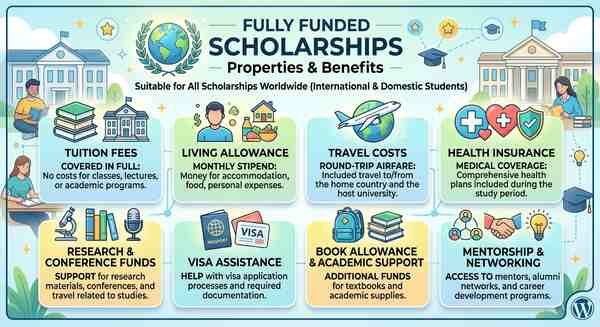
Applicants interested in fully funded awards can explore government-sponsored programs. The Manaaki New Zealand Scholarships cover complete tuition, living allowances, travel costs, and medical insurance. Subject-specific awards also exist for specialized disciplines like viticulture and oenology, landscape architecture, and sports and recreation. Reviewing the full range of faculty awards ensures you select the option best aligned with your background.
Academic Eligibility Criteria and Admission Requirements
Qualifying for funding requires meeting both university entry criteria and award merit thresholds. You must hold status as an international, fee-paying student. Applicants must not hold concurrent major awards, as dual award restrictions apply. Academic records must reflect consistent performance, typically equal to a B+ average or a cumulative GPA of 3.0 on standard international scales.
Accepted secondary qualifications include the International Baccalaureate, A-levels, or New Zealand’s NCEA level 3. Undergraduate candidates applying for advanced standing must submit verified course descriptions alongside academic records. Postgraduate applicants must hold a recognized bachelor’s degree from an accredited institution. The admissions panel assesses transcripts to confirm course equivalency before confirming eligibility.
English language proficiency is a core requirement for all international applicants. Standard test benchmarks require an IELTS score of 6.0 to 6.5, a TOEFL iBT score of 80, or a PTE academic score of 50. Candidates who completed prior studies in English can request an exemption using an official MOI letter. This document must confirm that English was the sole language of instruction throughout their previous program.
Meeting language requirements opens the door to an unconditional admission offer. Candidates who fall slightly below language cutoffs may receive a conditional offer letter linked to English pathway courses. First-time applicants must complete the primary application before scholarship allocations close. Ensuring your academic profile is fully documented helps avoid processing delays.
Step-by-Step Application Process and Required Documentation
Applying for study awards requires a structured approach. Start by selecting your intended degree and submitting an online application via the international student portal. Several major awards, including the Undergraduate Vice-Chancellor’s Scholarship, are processed via automatic assessment upon admission. Other competitive funding lines require submitting a separate scholarship application form directly to the scholarship committee.
A complete application package requires several key supporting documents. You must provide official, certified academic transcripts along with graduation certificates. Submit a clear copy of your passport biographical page to establish identity and nationality. Postgraduate applicants must also supply an up-to-date curriculum vitae outlining academic achievements and work history.
Written statements play an important role in evaluation. Candidates must write a focused personal statement or motivation essay. This document should detail your academic goals, personal accomplishments, and leadership experience. Additionally, you must arrange for an academic referee to submit a confidential reference letter directly to the university admissions office.
Pay close attention to key application deadlines. The primary deadline for Semester 1 studies falls on January 31. Semester 2 consideration closes on June 30, while summer sessions close on October 31. Once submitted, the selection committee reviews applications and submits recommendations to the vice-chancellor. Successful candidates receive an official award letter detailing their funding package.
Financial Coverage, Tuition Waivers, and Living Cost Allowances
Understanding financial structures helps you build an accurate study budget. Most awards take the form of a tuition fee reduction credited directly to your student account. For example, a candidate receiving a NZD 10,000 waiver sees that amount deducted from their initial fee statement invoice. This arrangement lowers your upfront capital requirements before enrollment.
While partial awards reduce study costs, you must cover remaining living cost requirements. The cost of living in Canterbury averages NZD 18,000 to NZD 20,000 per academic year, covering campus housing, food, utilities, and books. International students must also purchase a comprehensive health insurance policy to meet student visa conditions. Factor in these essential expenses alongside your tuition planning.
Scholarship disbursements are applied proportionally across enrolled semesters. Funds are credited after class enrollment is confirmed at the start of each term. If a student withdraws from their program, scholarship credits are non-refundable. Keeping a clear financial plan ensures smooth handling of your university account throughout your studies.
Visa Guidelines and Post-Study Work Opportunities in New Zealand
After accepting your scholarship offer, you must apply for a fee-paying student visa through Immigration New Zealand. Applications are processed online via the official INZ portal. Key documentation includes your official offer letter, scholarship award summary, a valid medical certificate, a chest x-ray, and a clean police clearance certificate.
Applicants must demonstrate sufficient funds to cover remaining tuition and living expenses. Financial proof can include bank statements, official loan approvals, or sponsorship documentation. Showing clear, verifiable funding accelerates visa processing and avoids unnecessary delays.
Student visa holders receive full part-time work rights, allowing employment for up to 20 hours per week during term time. During scheduled academic breaks, students can work full-time. Local jobs in Christchurch offer practical experience and help support day-to-day living costs.
Graduates can apply for a post-study work visa upon completing an eligible degree. Depending on your program level, post-study work permits allow you to work in New Zealand for one to three years. Specialized fields like agriculture, environmental science, and data analysis match regional employment needs, offering strong career options and potential pathways to long-term residency.
Frequently Asked Questions (Latest Google People Also Ask)
What is the maximum scholarship amount available at Lincoln University for international students?
Selected taught master’s candidates can receive up to NZD 15,000 in tuition fee waivers. Undergraduate awards range from NZD 3,000 to NZD 10,000 based on academic performance. Fully funded options like the Manaaki New Zealand Scholarship cover complete tuition and living expenses.
Can I apply for Lincoln University scholarships without an IELTS score?
Yes, candidates can satisfy English requirements using a Medium of Instruction (MOI) letter if their previous degree was taught entirely in English. Alternatively, applicants can complete Lincoln’s internal English language pathway programs to qualify.
Do I need a separate scholarship application form for every award?
No, several awards—such as the International Undergraduate Scholarship and Vice-Chancellor’s Award—are assessed automatically upon admission. However, specialized awards and taught master’s merit grants require a dedicated scholarship form and motivation essay.
What academic average is required to secure a merit scholarship?
Applicants generally need a B+ grade average or a cumulative GPA of 3.0 on a 4.0 scale. Higher academic scores strengthen your application for top-tier vice-chancellor awards.
Are international students in New Zealand allowed to work while studying?
Yes, student visa holders can work up to 20 hours per week during academic semesters. Full-time work is permitted during scheduled university vacations and official semester breaks.
Conclusion
Securing a scholarship at Lincoln University in New Zealand significantly reduces tuition costs while opening access to top-tier land-based research and education. By preparing your transcripts, language proofs, and statement of purpose early, you can take full advantage of these competitive funding opportunities. Align your application with key intake deadlines to build a clear, confident path toward your international degree.
Official Scholarship & University Resources
Lincoln University Official International Scholarships Page – Application Deadline: January 31, 2027 (Semester 1 2027) | Currently Open
Lincoln University Official International Admissions Portal – Application Deadline: December 1, 2026 (Semester 1 2027 Admission) | Currently Open
Manaaki New Zealand Scholarships Official Government Portal – Application Deadline: February 28, 2027 | Opening Soon
Stay Connected!
Never miss a scholarship deadline! Join our channels for daily fully-funded opportunities & instant alerts.