
Stanford University Knight Hennessy Scholarship 2027 (Fully Funded). Apply for fully funded scholarships from here. The Knight-Hennessy Scholars Program at Stanford University is one of the world’s largest fully funded graduate scholarship programs—and arguably the most ambitious in its vision. Launched in 2017 with a $750 million founding gift from Phil Knight and his wife Penny, it funds exceptional graduate students from every country and every graduate program at Stanford to become purpose-driven leaders capable of addressing the world’s most complex challenges.
Stanford University Knight Hennessy Scholarship 2027 Details:
| University: | Stanford University |
| Degree level: | Masters, PhD, MBA, MFA, MD, JD |
| Scholarship coverage: | Fully Funded |
| Eligible nationality: | All Nationalities |
| Award country: | United States |
| Last date: | 6 October 2026 |
In 2027, the Knight-Hennessy Scholars Program is accepting applications from outstanding individuals worldwide who want to pursue any of Stanford’s more than 200 master’s, PhD, JD, MD, and MBA programs—fully funded—alongside a rigorous leadership development curriculum. This complete guide covers every essential detail: scholarship benefits, eligibility, how to apply, the US F-1 student visa application process, OPT and STEM OPT post-study work visa options, and the permanent residence pathway in the United States after Stanford.
Stanford University Free Online Courses | Stanford Online
🌍 More Available Jobs

What Is the Knight-Hennessy Scholars Program?
The Knight-Hennessy Scholars Program (KHSP) is distinct from most graduate scholarships in a critical way—it does not fund a specific academic program or field. Instead, it selects exceptional individuals from any discipline, admitted to any of Stanford’s graduate or professional schools, and provides them with full financial support alongside a three-year leadership development curriculum at the Hasso Plattner Institute of Design (d.school) and through the Knight-Hennessy Scholars community.
The program currently selects up to 100 new scholars each year from a global applicant pool, making it highly competitive but globally accessible. Scholars come from every continent and pursue graduate studies in medicine, law, engineering, business, education, the arts, public policy, and the natural sciences. The unifying thread is not discipline — it is the demonstrated commitment to collaborative leadership and the capacity to create positive change in the world. An education consultant for the United States or a university admission consultant with Stanford experience will confirm that the Knight-Hennessy is uniquely positioned among global scholarships for both its financial generosity and its explicit focus on leadership development rather than academic discipline alone.
Knight-Hennessy Scholars Program at a Glance
| Detail | Information |
| Program Name | Knight-Hennessy Scholars Program (KHS) |
| Host University | Stanford University, Stanford, California, USA |
| Founding Gift | $750 million—the largest fully funded graduate scholarship in history |
| Annual Scholars Selected | Up to 100 new scholars per year |
| Eligible Degree Programs | Any graduate or professional degree at Stanford—master’s, PhD, JD, MD, MBA, MS, MFA |
| KH Funding Duration | 3 years of Knight-Hennessy support (underlying academic program may be shorter or longer) |
| Eligible Nationalities | All nationalities worldwide—US citizens and international students equally eligible |
| Application Portal | https://knight-hennessy.stanford.edu/ |
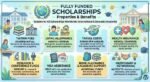
What Does the Knight-Hennessy Scholarship Cover?
The Knight-Hennessy Scholars Program provides one of the most comprehensive financial packages available to graduate students anywhere in the world. It eliminates the financial barriers that typically prevent talented individuals from accessing Stanford’s graduate programs — barriers that even the most motivated students face when confronted with Stanford’s tuition rates and the high cost of living in Silicon Valley’s Palo Alto. No education loans without collateral, education financing options from external lenders, or complex tuition fee transfer abroad arrangements are needed for Knight-Hennessy Scholars.
🌍 More Available Jobs
Montessori Line Scholarship Notification
Never miss a scholarship deadline! Join our channels for daily fully-funded opportunities & instant alerts.


Kansas State University Scholarship in United States: How To Apply
Full Scholarship Benefits Table
| Benefit | Details |
| Tuition Fees | 100% covered for the full duration of KH-supported study (up to 3 years) |
| Living Stipend | Full cost-of-living stipend calibrated to Stanford/Palo Alto cost of living |
| Student Accommodation (USA) | Stanford on-campus graduate housing provided or funded as part of scholarship package |
| International Student Health Insurance | Full health insurance coverage through Stanford’s Cardinal Care health plan |
| Academic Costs | Books, academic fees, and program-related expenses covered |
| Travel Allowance | Annual travel allowance for international scholars to return home |
| Leadership Programming | Full access to 3-year KH leadership curriculum, d.school programs, and global scholar community |
| Professional Development Fund | Personal development budget for conferences, training, and leadership activities |
| Alumni Network | Lifelong access to KH Scholars global alumni community—Stanford’s most internationally connected network |
The combined annual value of the Knight-Hennessy scholarship package — including Stanford tuition (approximately $60,000–$70,000 per year for most programs), living costs in Palo Alto ($25,000–$35,000 per year), health insurance, and travel allowance — is estimated at $100,000 to $120,000 per year, or $300,000 to $360,000 over the three-year funding period. This makes it one of the highest total-value graduate scholarships in the world.
Three Pillars of Knight-Hennessy Scholar Selection
The Knight-Hennessy selection framework is organized around three core qualities that the program believes are essential for collaborative, purpose-driven leaders. Understanding these pillars—and being able to articulate how you embody them authentically—is the foundation of a competitive Knight-Hennessy application. A university admission consultant or education consultant for the United States with KH-specific experience can help you align your application materials most powerfully with these three selection dimensions.
Study in USA Without IELTS | Study Free in USA for International Students
Pillar 1 – Principled Leadership
Knight-Hennessy Scholars must demonstrate a deeply developed personal value system and a history of leading with integrity. The program is looking for candidates who have consistently acted on their principles—even when it was difficult—and who have inspired others to do the same. This is not about holding formal leadership titles. It is about demonstrating that you have a clear moral compass, that your leadership is driven by genuine conviction rather than self-interest, and that you have a track record of making principled decisions in real and often challenging contexts.
Pillar 2 – Civic Mindedness
KH Scholars are expected to care deeply about others—not just in their immediate community but at a global scale. The program looks for candidates who have demonstrated a genuine commitment to public good through sustained, meaningful service — whether in government, civil society, social enterprise, community organizing, or international development. Civic mindedness is demonstrated not through a list of activities but through a coherent narrative of consistent engagement with issues that matter beyond the self.
Pillar 3 – Collaborative Nature
Perhaps the most distinctive quality the program seeks is genuine collaborative capacity. KH Scholars are not defined by individual achievement — they are defined by what they help others achieve and by the communities and partnerships they build. The program selects candidates who can work effectively across disciplines, cultures, and sectors—who have demonstrated that their greatest accomplishments happen in teams and who genuinely believe that the best solutions emerge from collective intelligence rather than individual brilliance. A study abroad consultant near you or an international student recruitment agency with KH application experience can help you identify and articulate the collaborative dimensions of your leadership story most compellingly.
Eligibility Criteria for Knight-Hennessy Scholars 2027
The Knight-Hennessy Scholars Program has clear eligibility requirements that must be understood before starting your application. The program’s openness to all nationalities and all Stanford graduate programs makes it uniquely accessible—but its competitiveness means that meeting the eligibility criteria is only the beginning of what a successful application requires. An education consultant for the United States or a university admission consultant familiar with KH applications can assess your eligibility and competitive strength quickly and realistically.
Eligibility Overview
| Criterion | Requirement |
| Nationality | All nationalities worldwide—US citizens and international applicants equally welcome |
| Degree Level | Must be applying for a graduate or professional degree at Stanford—master’s, PhD, JD, MD, MBA, MFA, or other |
| Academic Achievement | Exceptional undergraduate academic record—admitted applicants typically have GPAs in the top 5–10% of their undergraduate class |
| Work Experience | No minimum work experience required—but meaningful professional or community engagement strongly valued |
| Age at Enrollment | Must be enrolled in the qualifying Stanford program by the start of KH funding—no strict upper age limit |
| Stanford Admission | Must receive and hold a valid Stanford graduate program admission to be confirmed as KH Scholar |
| English Language | Must meet Stanford’s English proficiency requirement for their chosen program—TOEFL iBT or IELTS as required by program |
| Eligible Programs | Any of Stanford’s 200+ graduate and professional degree programs across all seven schools |
Stanford’s Graduate Programs Available to Knight-Hennessy Scholars
One of the Knight-Hennessy program’s most distinctive features is its complete openness to any of Stanford’s graduate programs across all seven schools. This cross-disciplinary diversity is intentional—the KH community benefits specifically from the intellectual range that scholars from different fields bring to shared leadership experiences. Below are Stanford’s major graduate schools and their most relevant programs for international KH applicants.
Stanford School of Engineering
Stanford Engineering is consistently ranked the world’s number one engineering school, with particular global recognition in computer science, electrical engineering, bioengineering, and management science and engineering. Most engineering master’s and PhD programs are fully funded through research or teaching assistantships regardless of KH scholarship status—meaning KH Scholars in engineering receive the strongest possible financial support from two complementary sources. For international students planning a post-study work visa in the US technology sector, a Stanford Engineering credential is the most competitive academic qualification available in the global job market.
Stanford Law School (SLS)
Stanford Law School is consistently ranked in the global top five law schools and offers JD, JSM (Master of Science of Law), and JSD programs. JD students from Stanford Law have the strongest employment outcomes in the American legal market, with essentially 100% employment rates in major law firms, government agencies, and judicial clerkships. International KH scholars pursuing JD programs gain both a world-class legal education and the leadership development curriculum—a powerful combination for those targeting careers in international law, human rights, or global policy. An immigration attorney consultation at Stanford’s international student services helps JD graduates understand their F-1 visa and OPT work authorization timeline after graduation.
Alexander Rave Foundation Scholarship in Germany (Fully Funded)
Stanford Graduate School of Business (GSB)
Stanford GSB is widely regarded as the world’s most selective business school and consistently ranked in the global top three. The GSB’s MBA program accepts approximately 430 students per year from tens of thousands of applicants globally. GSB graduates command among the highest MBA starting salaries in the world, and the school’s Silicon Valley location makes it the primary talent pipeline for the US technology and venture capital industries. KH Scholars at the GSB receive full tuition coverage for their MBA—dramatically improving the already strong financial aid available to GSB students. A study abroad consultant near you with GSB application experience can advise on how to position your leadership profile most competitively for the combined GSB-KH application.
Stanford School of Medicine
Stanford School of Medicine is one of the world’s leading medical research institutions, offering MD and PhD programs in clinical medicine, biomedical sciences, and public health. KH Scholars pursuing medical degrees benefit from Stanford’s extraordinary clinical and research infrastructure—including partnerships with Stanford Health Care, the Lucile Packard Children’s Hospital, and SLAC National Accelerator Laboratory. Medical researchers who combine a Stanford MD or PhD with the KH leadership curriculum are uniquely positioned for careers at the intersection of science, policy, and global health—one of the most impactful career spaces in the world today.
Stanford School of Education
Stanford’s Graduate School of Education offers master’s and doctoral programs in education policy, learning sciences, international and comparative education, and curriculum design. Education scholars who combine technical pedagogical expertise with the KH leadership framework are particularly well-prepared for careers in educational systems reform—a field of urgent global need. KH scholars in education have gone on to found schools, lead national education ministries, and build influential EdTech companies—making this one of the highest-impact combinations available through the program.
Stanford School of Earth, Energy and Environmental Sciences (SEEES)
SEEES offers graduate programs in energy science, climate science, environmental policy, geological sciences, and ocean sciences — disciplines at the center of the most pressing global challenges of our era. KH Scholars in energy and environment are particularly well-positioned given the global urgency of climate action and the Stanford campus’s deep connections to the clean energy and climate policy communities in Washington, DC, Brussels, and beyond. For international graduates planning a skilled worker visa in the growing US clean energy sector, a Stanford SEEES credential is among the most valuable available.
How to Apply for the Knight-Hennessy Scholarship 2027
The Knight-Hennessy application process runs in parallel with — and is separate from — the Stanford graduate admissions process. Both applications are required, and both have their own distinct deadlines that must be met simultaneously. This dual-track application process is the most common source of confusion for applicants, and managing both carefully is essential for maximizing your chances of both Stanford admission and KH scholarship selection. An international student recruitment agency or education consultant for the United States with KH-specific experience can coordinate both application tracks seamlessly.
Step-by-Step Application Process
| Step | Action Required |
| Step 1 | Choose your target Stanford graduate program—your program choice is part of your KH application narrative |
| Step 2 | Research the program’s admission requirements (GPA, test scores, language requirements) and confirm your eligibility |
| Step 3 | Prepare your KH application materials—personal statement, two short essays, CV, and leadership record |
| Step 4 | Identify and request recommendations from referees who can authentically speak to all three KH pillars |
| Step 5 | Submit the KH application through the KH online portal before October 9, 2026 (typical annual deadline) |
| Step 6 | Apply to your chosen Stanford graduate program through the Stanford graduate admissions system — typically December 1 deadline |
| Step 7 | Attend a KH semifinalist interview (conducted in-person at Stanford or virtually—typically January–March) |
| Step 8 | Receive KH Scholar offer and Stanford graduate admission confirmation |
| Step 9 | Accept scholarship and receive I-20 form from Stanford for F-1 student visa application process |
| Step 10 | Pay SEVIS I-901 fee, complete DS-160, attend F-1 visa interview at US Embassy — travel to Stanford for September orientation |
Application Deadline for Knight-Hennessy Scholars 2027
The Knight-Hennessy application for the 2027 class (starting autumn 2027) will have a KH portal deadline in early October 2026 — the exact date typically falls on the second Wednesday of October. The Stanford graduate program application deadline is separate and typically falls in December 2026 or early January 2027 depending on the program. Always verify current deadlines directly on the official KH website, as these dates are confirmed annually. Missing the KH deadline by even a day is disqualifying—apply early. A study abroad consultant near you or an education consultant for the United States with KH experience can set up calendar reminders and application checklists well in advance of both deadlines.
Required Documents for Knight-Hennessy Scholarship Application
The Knight-Hennessy application requires a highly curated set of materials that collectively tell the story of a principled, civically minded, and collaborative leader with a compelling vision for what they will do with a Stanford graduate education. Every element of your application should authentically illustrate all three KH pillars — not just the essays. A university admission consultant with KH scholarship experience can review your complete package and provide targeted feedback before the October 2026 deadline.
Document Checklist
| Document | Details |
| Valid Passport | Required for F-1 visa process — must be valid for at least 2 years beyond intended arrival |
| Academic Transcripts | All undergraduate and graduate records — official copies in English or with certified translation |
| Degree Certificates | Certified copies — translated to English if issued in another language |
| Personal Statement | KH-specific personal statement addressing your principled leadership, civic engagement, and collaborative experience — word-limited per KH portal instructions |
| Short Answer Essays | Two to three short-answer responses to KH-specific prompts—typically 300–500 words each |
| Curriculum Vitae / Resume | 2-page maximum — academic achievements, professional experience, leadership roles, service, and publications |
| Letters of Recommendation | Three letters—from a mix of academic and professional referees who can address all three KH selection pillars |
| Stanford Application Materials | Submitted separately through Stanford’s graduate admissions portal—includes program-specific SOP and test scores (GRE, GMAT, LSAT, MCAT as required) |
| English Language Test Score | TOEFL iBT (minimum 89–100 depending on program) or IELTS (minimum 7.0)—required by Stanford for most non-native English speakers |
US F-1 Student Visa Application Process for KH Scholars 2027
Once you receive your Knight-Hennessy Scholars award and Stanford graduate admission confirmation, the next step is applying for a US student visa—specifically the F-1 non-immigrant visa, which is the standard study permit for international students at US academic institutions. The F-1 student visa application process in the United States is conducted through the US Embassy or Consulate in your home country, and Stanford’s KH support team provides extensive guidance to international scholars throughout every step.
US F-1 Visa Key Requirements for KH Scholars
| Requirement | Details |
| Visa Type | F-1 Non-Immigrant Student Visa |
| Form I-20 | Certificate of Eligibility issued by Stanford’s Bechtel International Center after admission confirmation |
| SEVIS Fee | $350 — paid at fmjfee.com before visa interview appointment |
| Financial Proof | KH scholarship award letter satisfies the financial requirements—no personal bank statement needed |
| DS-160 Form | Completed online at ceac.state.gov before scheduling the embassy interview |
| Visa Interview | Required at US Embassy or Consulate—bring I-20, DS-160, SEVIS receipt, scholarship letter, passport |
| Health Insurance | Covered by KH scholarship through Stanford’s Cardinal Care plan—confirmed prior to arrival |
| Work Rights on F-1 | On-campus work up to 20 hours/week; off-campus CPT and OPT authorization available with program requirements |
| Processing Time | 3–8 weeks from complete application—longer during peak periods (April–July) |
For KH scholars from countries with complex US visa histories or for applicants with previous visa complications of any kind, consulting an immigration lawyer United States professionals trust or seeking an immigration attorney consultation before your F-1 visa interview is strongly advisable. Immigration consultant fees for US student visa support are modest relative to the value of your Stanford opportunity, and the best immigration law firm specializing in US student and scholar visas can prevent documentation errors that cause avoidable delays. Stanford’s Bechtel International Center also provides comprehensive visa guidance to all admitted international scholars—take full advantage of this institutional support throughout your F-1 preparation process.
Life at Stanford as a Knight-Hennessy Scholar
The Stanford campus experience as a KH Scholar is genuinely extraordinary—a combination of Silicon Valley’s most innovative ecosystem, world-class academic infrastructure, the intimate community of the KH Scholars program itself, and access to one of the most globally connected alumni networks in existence. Stanford’s 8,000-acre campus in Palo Alto is one of the most beautiful university environments in the world, with Mediterranean architecture, world-class museums, a performing arts center, and a climate that makes outdoor academic culture genuinely possible year-round.
Student Accommodation at Stanford
Stanford guarantees on-campus housing for all incoming graduate students for their first year of study, with options across the university’s graduate residence halls and co-ops. Knight-Hennessy Scholars benefit from subsidized housing support as part of their scholarship package, and the KH program facilitates connections between incoming scholars that often lead to shared housing arrangements in subsequent years. Student accommodation in the United States at Stanford — while reflecting Palo Alto’s high cost of living — is significantly more affordable through the university’s housing system than comparable private rentals in the surrounding area. The KH program’s relocation services for students also include pre-arrival housing orientation and community integration events that help international scholars settle quickly and comfortably.
International Student Health Insurance at Stanford
All Stanford students — including KH Scholars — are enrolled in Stanford’s Cardinal Care health insurance plan, which provides comprehensive coverage for medical, dental, vision, and mental health services at Stanford Health Care facilities and partner providers nationwide. For KH Scholars, the Cardinal Care premium is fully covered by the scholarship—eliminating the $1,000–$2,500 annual insurance cost that most international graduate students pay out of pocket. Cardinal Care’s coverage is among the most comprehensive student health plans available at any US university, making it a genuine benefit for KH scholars who want peace of mind about their healthcare access in the United States throughout their program.
The KH Leadership Curriculum at d.school
Beyond their academic programs, KH Scholars participate in a structured three-year leadership development curriculum centered at Stanford’s Hasso Plattner Institute of Design—one of the world’s most renowned centers for human-centered design thinking. The curriculum includes design thinking bootcamps, global leadership immersions, policy innovation labs, and cross-disciplinary research projects that bring together scholars from law, medicine, engineering, business, and the arts. This curriculum is the defining feature that distinguishes the KH experience from other fellowship programs—it ensures that every KH Scholar develops practical leadership skills alongside their academic credentials.
Post-Study Work Visa and PR Pathway in the USA After Stanford
A Stanford graduate degree combined with the Knight-Hennessy Scholars credential creates one of the most powerful post-graduation profiles available in the US job market and immigration system. The United States offers clear post-study work authorization through the Optional Practical Training program and STEM OPT extension—providing Stanford graduates with up to three years of US work authorization that creates a realistic pathway to H-1B employer sponsorship and eventual Green Card permanent residence.
OPT and STEM OPT – Post-Study Work Permit in USA
Optional Practical Training (OPT) is the primary post-study work permit for F-1 visa graduates in the US. Standard OPT provides 12 months of work authorization in your field of study after graduation. STEM graduates—which includes most Stanford Engineering, Computer Science, and Science program graduates—can apply for a 24-month STEM OPT extension, giving a total of 36 months (three years) of US work authorization. During OPT, you can work for any employer without requiring employer visa sponsorship. An immigration attorney consultation at the start of your final year at Stanford helps you apply for OPT at the earliest eligible moment and understand how to protect your immigration status during the transition to OPT from your F-1 student status.
H-1B Skilled Worker Visa Pathway
After OPT, most KH graduates who wish to remain in the US long-term pursue H-1B visa sponsorship through a qualifying US employer. The H-1B is the primary skilled worker visa in the United States for specialty occupation professionals—covering roles in technology, finance, medicine, law, consulting, and hundreds of other fields. H-1B requires employer sponsorship and is subject to an annual lottery cap — but STEM OPT holders receive an additional H-1B cap-exempt lottery entry, significantly improving their selection odds. Skilled worker visa requirements for H-1B include a qualifying degree, a relevant job offer, and the employer’s willingness to file the petition. An immigration lawyer United States H-1B professionals recommend can advise both you and your employer on the H-1B filing timeline and petition requirements.
Green Card – Permanent Residence Application After Stanford
The US Green Card (lawful permanent resident status) is the ultimate PR after study goal for many international Stanford graduates. The most common pathway for KH-level candidates is through employment-based categories—primarily EB-1 (for individuals with extraordinary ability or outstanding researchers, for which Stanford research credentials are highly competitive), EB-2 (for advanced degree holders with exceptional ability), and EB-3 (for skilled workers). Stanford researchers and scholars also frequently benefit from National Interest Waiver (NIW) petitions under EB-2 — a pathway that allows self-petitioning for permanent residence without employer sponsorship for individuals whose work is in the national interest of the United States. An immigration lawyer the United States permanent residence specialists trust can evaluate whether you qualify for an NIW petition and help you file it at the optimal time during your Stanford or post-Stanford career.
US Post-Study Pathways Summary for KH Scholars
| Pathway | Details | Leads To |
| OPT (Standard) | 12 months after graduation — any F-1 graduate | US work experience for H-1B sponsorship pathway |
| STEM OPT Extension | 24 additional months for qualifying STEM degree holders | 3 years total US work authorization + enhanced H-1B lottery odds |
| H-1B Skilled Worker Visa | Employer-sponsored, specialty occupation, annual cap lottery | Multi-year US work residence + Green Card eligibility |
| EB-1 / EB-2 NIW Green Card | Extraordinary ability, outstanding researcher, or national interest waiver petition | US Permanent Residence — especially accessible for Stanford researchers |
| EB-2 / EB-3 Employer Green Card | Employer-filed PERM labor certification + I-140 immigrant petition | US Permanent Residence (timeline varies by country of birth) |
| US Citizenship | After 5 years of Green Card (3 years if married to US citizen) | Full US citizenship and passport |
Cost of Living at Stanford and in Palo Alto 2027
Palo Alto is one of the most expensive places to live in the United States—the combination of Silicon Valley’s tech-driven economy, limited housing supply, and proximity to San Francisco drives living costs significantly above the US national average. However, for Knight-Hennessy Scholars, the comprehensive financial support package eliminates the financial burden of this high-cost location entirely. Understanding the full cost picture is nonetheless useful for planning personal spending and understanding how your scholarship package is calibrated.
Annual Cost of Living at Stanford for Graduate Students
| Expense Category | Annual Estimate (USD) | KH Scholarship Coverage |
| Tuition and Academic Fees | $62,000–$70,000 | Fully covered |
| On-Campus Housing | $15,000–$22,000 | Covered by living stipend |
| Food and Meals | $5,000–$8,000 | Covered by living stipend |
| International Student Health Insurance | $2,000–$3,000 (Cardinal Care) | Fully covered by scholarship |
| Books and Academic Supplies | $1,000–$2,000 | Covered by scholarship academic allowance |
| Personal, Transportation, and Leisure | $5,000–$8,000 | Covered by living stipend |
| Total Annual Estimate | $90,000–$113,000 | Fully covered by KH scholarship |
The Knight-Hennessy package is calibrated to cover all of these costs—meaning KH Scholars genuinely have no out-of-pocket educational expenses during their three years of scholarship support. This eliminates the need for financial aid for international students from external sources, education loans without collateral, or any supplementary tuition fee transfer abroad from family or personal savings. For scholars who have dependants joining them at Stanford, the KH program provides additional family support allowances, and Stanford’s comprehensive relocation services for students and families make the transition to Palo Alto as smooth as possible even for scholars coming from very different geographic and cultural backgrounds.
Tips to Maximize Your Knight-Hennessy Application Success
Choose Your Stanford Program as Carefully as Your KH Application
The most common mistake KH applicants make is treating their Stanford program choice as secondary to their KH materials. In reality, your program choice is central to your KH narrative — the selection committee evaluates whether your choice of graduate study at Stanford is the most logical, specific, and compelling next step in your leadership journey. A generic or poorly justified program choice undermines even the most compelling leadership story. Your program must be the right program for you right now — and your application must explain specifically, in detail, why Stanford’s specific program resources, faculty, and ecosystem make it uniquely the right place for the work you want to do.
Build Genuine Collaborative Leadership Experiences Before Applying
The KH collaborative pillar is the one that most genuinely differentiates KH-caliber candidates from conventionally excellent applicants. If your current portfolio of leadership experiences is primarily individual achievement—academic prizes, individual research publications, solo athletic performance—begin investing immediately in genuinely collaborative roles. Join or create cross-functional teams. Lead initiatives that require building coalitions across different communities. The goal is to develop a rich, authentic bank of specific examples that demonstrate how your leadership genuinely elevates others. An education consultant for the United States with KH experience can advise on which types of collaborative experiences resonate most strongly with the KH selection committee.
Apply for KH Before October—Not in the Final Days
The KH application portal closes with a hard deadline in early October — and the program’s reviewing committees begin their work immediately. Applications submitted in the final 48 hours before the deadline face the same evaluation as those submitted six weeks earlier — but applicants who submit early have more time to identify and fix any technical issues with their portal submissions, ensure their recommendation letters have been received, and make thoughtful final revisions to their essays. Plan to submit your completed KH application at least two weeks before the October deadline.
Frequently Asked Questions – Knight-Hennessy Scholars 2027
Is the Knight-Hennessy Scholarship fully funded?
Yes. The Knight-Hennessy Scholars Program is fully funded. It covers 100% of Stanford tuition and academic fees, provides a full cost-of-living stipend, covers on-campus housing, pays the full Cardinal Care health insurance premium, provides an annual travel allowance for international scholars, and funds a personal professional development budget. No additional education financing options, education loans without collateral, or financial aid from external sources are required during the three-year KH funding period.
Can I apply for KH and another scholarship simultaneously?
Yes. Applicants may apply to the Knight-Hennessy Scholars Program while simultaneously applying to other scholarships—including Fulbright, Rhodes (for eligible programs), and university-specific fellowships. However, if you receive the KH scholarship, its terms typically supersede other concurrent awards, and you should review the terms of any scholarship combination with both the KH office and the relevant scholarship administrator before accepting. A university admission consultant can advise on managing concurrent scholarship applications strategically.
Do I need to secure Stanford admission before applying to KH?
No — both applications run simultaneously. You submit the KH application in October and the Stanford graduate program application in December of the same cycle. However, final KH scholar designation is contingent on receiving a valid Stanford graduate admission. This means the KH application process can move forward in parallel with your Stanford application without requiring admission first. Always verify current process requirements on the official KH website, as these may be updated between cycles.
What is the acceptance rate for Knight-Hennessy Scholars?
The KH program is extremely competitive—it receives thousands of applications from exceptional candidates worldwide and selects approximately 100 scholars annually. The acceptance rate is estimated at below 2% of total applicants, though the admitted pool is drawn from an already highly filtered group who meet the academic and leadership quality thresholds. The most important factor is not statistics but preparation—candidates who invest thoroughly in authentic self-reflection, precise program alignment, and compelling application writing consistently outperform those with nominally stronger academic credentials but less focused applications.
What happens to my F-1 visa status after the 3-year KH funding period?
If your Stanford program extends beyond three years (common for MD, JD, and some PhD programs), your Stanford enrollment continues and your F-1 student status remains valid for the duration of your program—the KH financial support may transition to other funding sources (research assistantships, program fellowships) for years beyond the KH window. After graduation, you apply for OPT through Stanford’s Bechtel International Center, which provides detailed F-1 post-completion work authorization guidance. An immigration attorney consultation at the start of your final year ensures your OPT application is filed at the optimal time.
Official Scholarship and Visa Application Websites – Knight-Hennessy Scholars 2027
Always use official, verified sources for your Knight-Hennessy and Stanford applications and for your US F-1 visa process. The table below lists every essential website for your Stanford-KH journey in 2027. Never pay unauthorized agents who claim to process KH or Stanford applications — the KH program and Stanford have no authorized fee-charging representatives, and the best immigration law firm for US student visas handles applications through official USCIS and UKVI channels only.
| Resource | Official Website | Purpose |
| Knight-Hennessy Scholars Program | https://knight-hennessy.stanford.edu/ | Official KH application portal, eligibility, deadlines, and program details |
| Stanford Graduate Admissions | https://gradadmissions.stanford.edu/ | Stanford graduate program directory, admissions portal, and requirements |
| Stanford Bechtel International Center | https://bechtel.stanford.edu/ | F-1 visa guidance, I-20 issuance, OPT authorization, and international scholar support |
| US F-1 Student Visa (travel.state.gov) | https://travel.state.gov/content/travel/en/us-visas/study.html | Official F-1 student visa application process, requirements, and embassy finder |
| SEVIS Fee Payment (I-901) | https://www.fmjfee.com/ | SEVIS I-901 fee payment — required before F-1 visa interview |
| DS-160 Visa Application Form | https://ceac.state.gov/genniv/ | Online non-immigrant visa application form — completed before embassy interview |
| USCIS – OPT and STEM OPT | https://www.uscis.gov/working-in-the-united-states/students-and-exchange-visitors | OPT and STEM OPT post-study work authorization information |
| Stanford Financial Aid Office | https://financialaid.stanford.edu/ | Stanford financial aid for international students and scholarship coordination |
| Stanford Graduate School of Business | https://www.gsb.stanford.edu/ | Stanford MBA and other GSB programs for KH Scholars |
| Stanford Law School | https://law.stanford.edu/ | Stanford JD and JSM programs and admissions for KH Scholars |
Bookmark all of these official websites and revisit them regularly for updated application deadlines, portal changes, and US immigration policy announcements relevant to the 2027 KH and Stanford application cycle. If you need personalized support at any stage—from crafting your KH application essays to coordinating your F-1 visa and OPT planning—connect with a certified education consultant for the United States, a university admission consultant who has guided previous KH and Stanford applicants, or an immigration lawyer United States international students and scholars trust for F-1 visa, OPT, H-1B, and Green Card permanent residence guidance. The Knight-Hennessy Scholars Program is the most ambitious fully funded graduate scholarship in the world—begin your preparation today and take your rightful place among the extraordinary community of leaders at Stanford University in 2027.
Stay Connected!
Never miss a scholarship deadline! Join our channels for daily fully-funded opportunities & instant alerts.